

Abyss Survivor: finding a safe route through a hungry sea
Automatic weapons leave your attention free for the dangerous part: movement. Build your systems, collect salvage, and prepare for the Leviathan in Oppoz's deep-sea survival game.
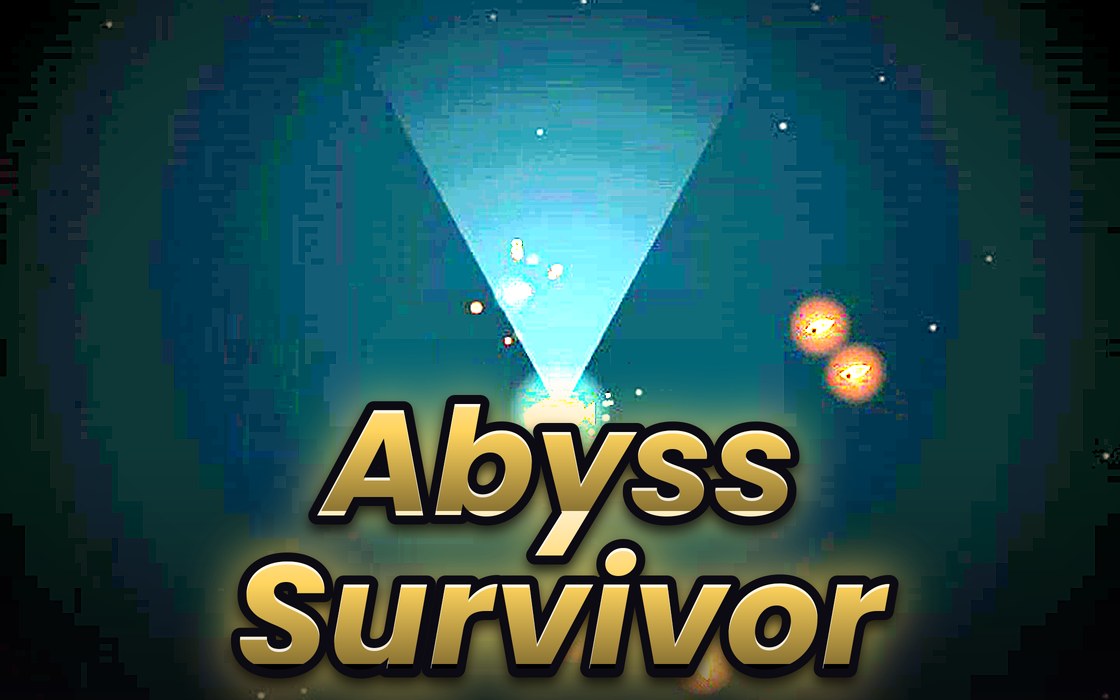
A small light in a threatening ocean
Abyss Survivor puts a small illuminated vessel in a dark underwater arena. Hostile creatures approach while your weapons fire automatically, leaving you to find a route through the danger. The opening objective is clear: survive ten minutes and then defeat the Leviathan. The dark sea gives that familiar survival challenge a particular mood, with the player's light becoming an immediate point of orientation.
This spotlight covers the deep-sea game currently live on Oppoz. Other releases use similar names, including space and fantasy games, so their store pages should not be treated as evidence for this version. Here, the challenge is to keep moving, strengthen the vessel during a run, and avoid letting a promising collection of upgrades become an excuse to swim into trouble.
How to play: move while your systems work
Use WASD or the arrow keys to swim on desktop. On touch screens, drag to steer. Weapons attack automatically, so you do not have to divide every moment between steering and manually firing. Desktop players can press P to pause, and the interface also supplies pause and sound controls. Start by watching how nearby creatures move relative to your vessel and where an open route remains available.
Collecting experience supports level-ups and systems upgrades during the attempt. Those choices matter, but so does reaching pickups without being surrounded. A useful first habit is to collect along a route you can continue through, rather than treating every object as a reason for an abrupt turn. Your current weapons can help create space, but they do not guarantee that every direction is safe.
What makes a build feel different
The current weapon options offer distinct patterns of protection. Harpoon Gun fires at nearby threats, Arc Coil chains lightning between enemies, Sonar Burst creates a knockback ring, and Drone Shoal adds orbiting robotic fish. Upgrading those systems can change damage, frequency, coverage, or the number of attackers affected. The question is not only how much damage you have, but where that damage is being applied.
Supporting upgrades add another layer. Fins increases swimming speed, Hull Plating improves maximum health while providing a repair, and Tractor Field expands pickup range. Lumen Lamp increases light and slows foes within it. Between attempts, collected salvage can fund permanent upgrades such as Reinforced Hull, Ballistics Lab, Prop Upgrade, Deep Lamp, and Salvage Magnet. These systems give you several ways to address a run that felt too fragile, too slow, or too difficult to collect through.
The design psychology: survival is a sequence of routes
Our interpretation of Abyss Survivor's appeal is that automatic attacks make positioning the player's most continuous responsibility. A weapon can be powerful while the vessel is still badly placed. The satisfying decision is often finding a path that gives your systems time to work, then using the opening they create. That makes movement feel consequential without asking the player to learn a complicated firing routine.
This is editorial analysis of the live mechanics, not a statement of private developer intentions. The dark presentation makes the light and approaching threats stand out, while upgrades periodically offer a deliberate choice within the pressure. Permanent salvage spending then adds a longer reflection cycle: what limited the last attempt, and which improvement would make the next one more manageable? Survival remains a skill, even when the vessel begins with better equipment.
Why it is fun — and a sensible first-dive priority
The fun comes from turning an anxious opening into a run with a recognisable plan. A new weapon can make a previously dangerous approach easier to handle, and a movement or pickup upgrade can change which routes look practical. The ten-minute objective gives that development a destination, but the smaller decisions still matter along the way. A strong build feels best when you understand how to move with it.
For a first dive, prioritise staying mobile and noticing open space. Choose upgrades for the danger you are actually encountering rather than collecting names that sound powerful. If you are repeatedly trapped, consider movement and coverage as well as damage. The link below opens the verified Oppoz browser version. The article describes its current systems and objective without claiming an unverified external release or a guaranteed winning build.
Inside the game