
Barrage: Hold the Line makes every second of aiming matter
The cannon fires automatically, but the defence still depends on you. Read the descending bricks, protect the core, and build an armory that can handle the next wave.
A simple defence with a visible deadline
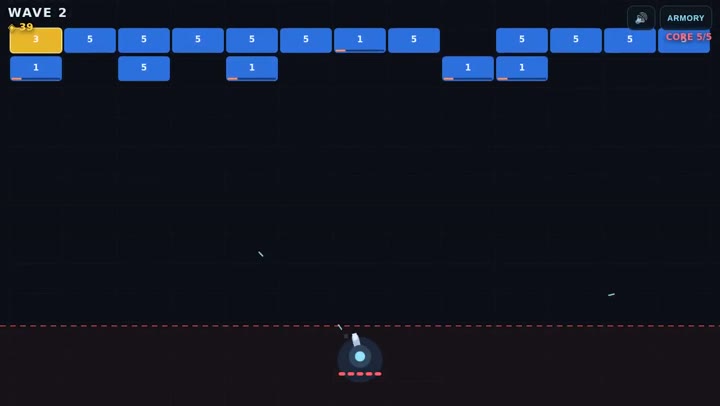
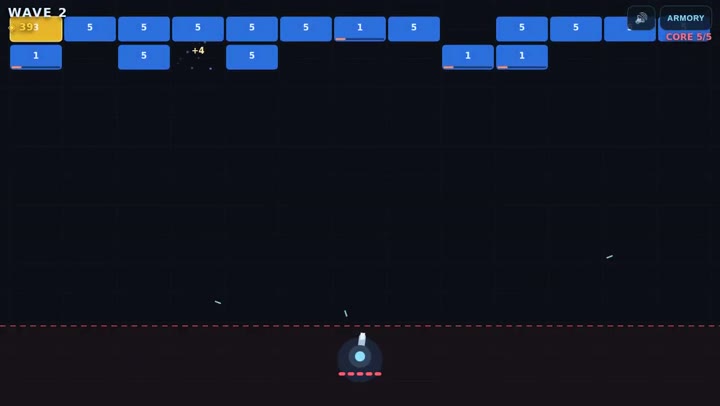
Barrage: Hold the Line places a cannon beneath rows of descending bricks and asks you to stop them before they reach the red boundary. The cannon fires by itself, so your main job is deciding where its stream of shots should go. A brick is both a target and a moving deadline: leave it alive long enough, and it can damage the core you are defending.
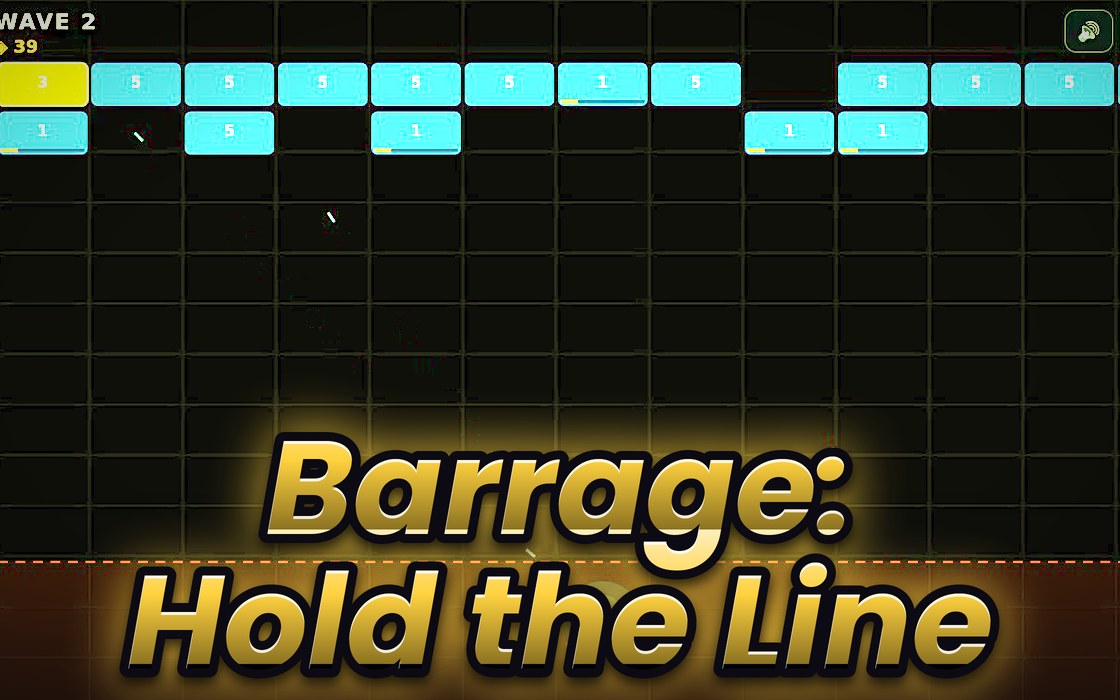
The current Oppoz version presents the pressure in an easy-to-read layout. Bricks display their remaining strength, the core has a health indicator, and the danger line gives the descent a clear destination. Clearing a wave creates room to think about upgrades before launching the next one. You are defending a position through a succession of small targeting choices, rather than managing a sprawling battlefield.
How to play: aim where the danger is developing
Aim with the mouse on desktop or drag to aim on a touch screen. Automatic firing lets you concentrate on the arrangement of targets instead of repeatedly pressing a shoot button. Watch which bricks are nearest the boundary, but also consider how much damage they still need. An almost-defeated brick and a healthy one at the same height do not ask for the same amount of attention.
The bomb is an additional tool once you unlock it through the armory. Space activates it on desktop, while touch players use the bomb control when it is charged. Its blast damages bricks across the screen and then requires recovery before another use. That makes it a resource to time, not a replacement for ordinary aiming. A threatening cluster can be a better reason to spend it than simply noticing that it is ready.
What makes the armory choices useful
Destroying bricks earns gold, and wave completion adds a bonus. The armory then offers several ways to improve the defence. Damage raises the strength of individual shots, Fire Rate sends them more quickly, and Multishot adds parallel streams. Pierce allows bullets to continue through more bricks. Those changes affect how effectively the cannon can deal with the pattern descending towards it.
Other purchases address the economy or the core. Gold Gain increases rewards from bricks, Armor expands maximum core health and heals a point, and Repair restores a point of health. Critical adds a chance of stronger hits, while Bomb unlocks the wider blast. A repair can answer the damage you already suffered, but it does not remove the targeting problem that caused the breach. Choosing between recovery and greater clearing power is part of the next wave's plan.
The design psychology: attention becomes the scarce resource
Our reading of Barrage's appeal is that automatic fire removes one repetitive action while leaving an important decision intact. You still have to decide which threat receives the cannon's time. As targets descend, switching aim has an opportunity cost: the brick you leave behind continues moving. The game creates pressure through visible consequences rather than requiring a large set of controls.
This is analysis of the current rules and interface, not a claim about private developer intentions. The red boundary makes urgency understandable, and the armory gives a completed wave a useful pause in the rhythm. You can examine what nearly broke through and buy accordingly. That link between an observed problem and a possible upgrade helps make the defence feel like something you are learning to shape.
Why it is fun — and a practical opening approach
Barrage is fun when a dangerous-looking wave becomes manageable because you made a few good priorities. Finishing one brick before changing aim, clearing a lane with piercing shots, or timing a bomb can visibly reduce the pressure. The upgrades make later waves feel different without replacing the central aiming task. You are building a better answer to the same clear challenge: keep the bricks away from the line.
For a first run, watch the lowest threats and try to finish targets deliberately instead of sweeping constantly across the screen. After a wave, ask whether you lacked damage, coverage, or enough core health to survive a mistake. Use that observation to guide your spending. The play link below opens the verified Oppoz game. This article is a spotlight on the current browser version, not a newly confirmed launch announcement for another store.
Inside the game