
Blob Merge Creatures: make the next drop create room
Drop matching creatures, use Hold to manage the queue, and turn a crowded container into a chain opportunity. Explore the physics-driven merge puzzle on Oppoz.
The pile is part of the puzzle
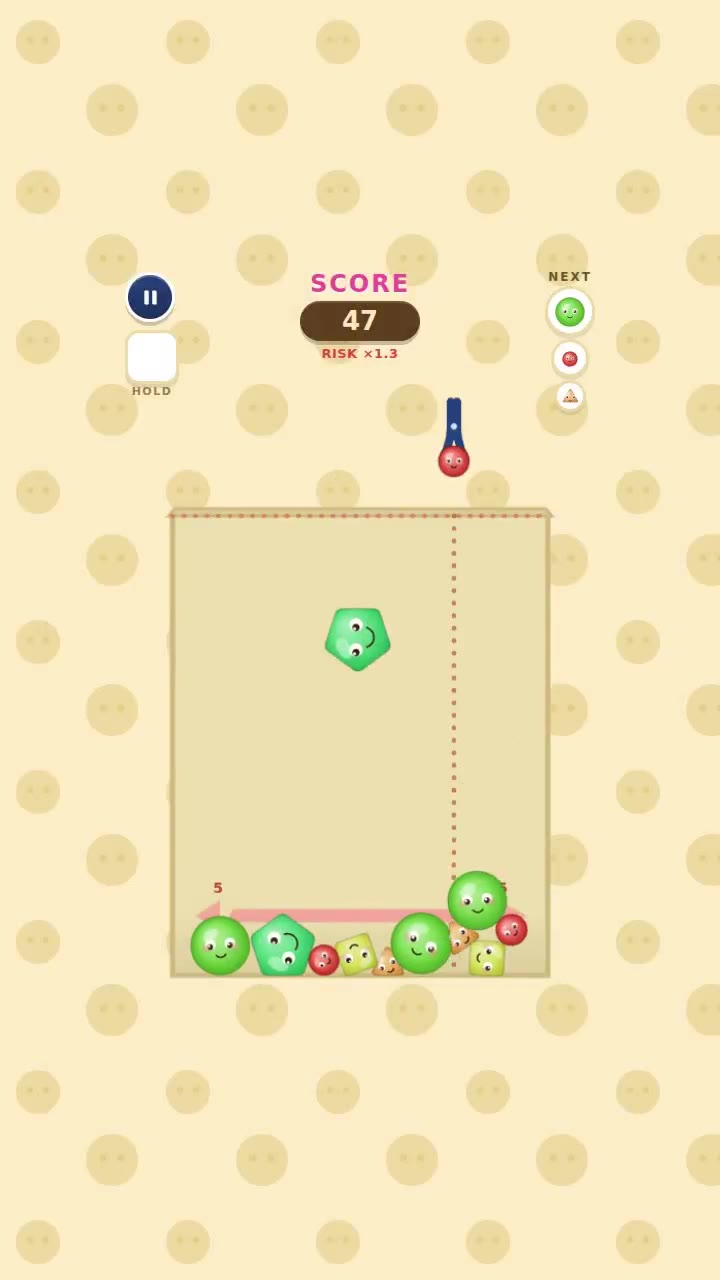
Blob Merge Creatures starts with a container and a supply of colourful creatures waiting above it. Drop two matching creatures together and they combine into the next tier. That simple rule changes the shape of the pile after every successful merge. A useful drop can connect two pieces, move their neighbours, and set up another match you did not have space for a moment earlier.
The current Oppoz game adds a visible queue, a Hold slot, limited side pushes, wild pieces, chains, and a Daily Challenge. These tools make it more than a search for the nearest matching colour. You are managing the next piece and the future arrangement of the container, while leaving enough space to continue dropping safely.
How to play: place before releasing
Move the mouse or your finger horizontally over the play area to choose the drop position. Releasing drops the current creature. The next queue shows upcoming pieces, so check it before deciding that a convenient gap is the best destination. A piece can be useful where it lands now and awkward for the one that follows.
Press H or select Hold to stash the current creature. If the slot is already occupied, Hold swaps the stored piece with the current one. You can use it once between drops, so it offers a choice about order rather than an unlimited way to cycle through pieces. Keep a stored creature for a clear purpose instead of treating the slot as somewhere to forget an inconvenient shape.
Several ways to make a merge count
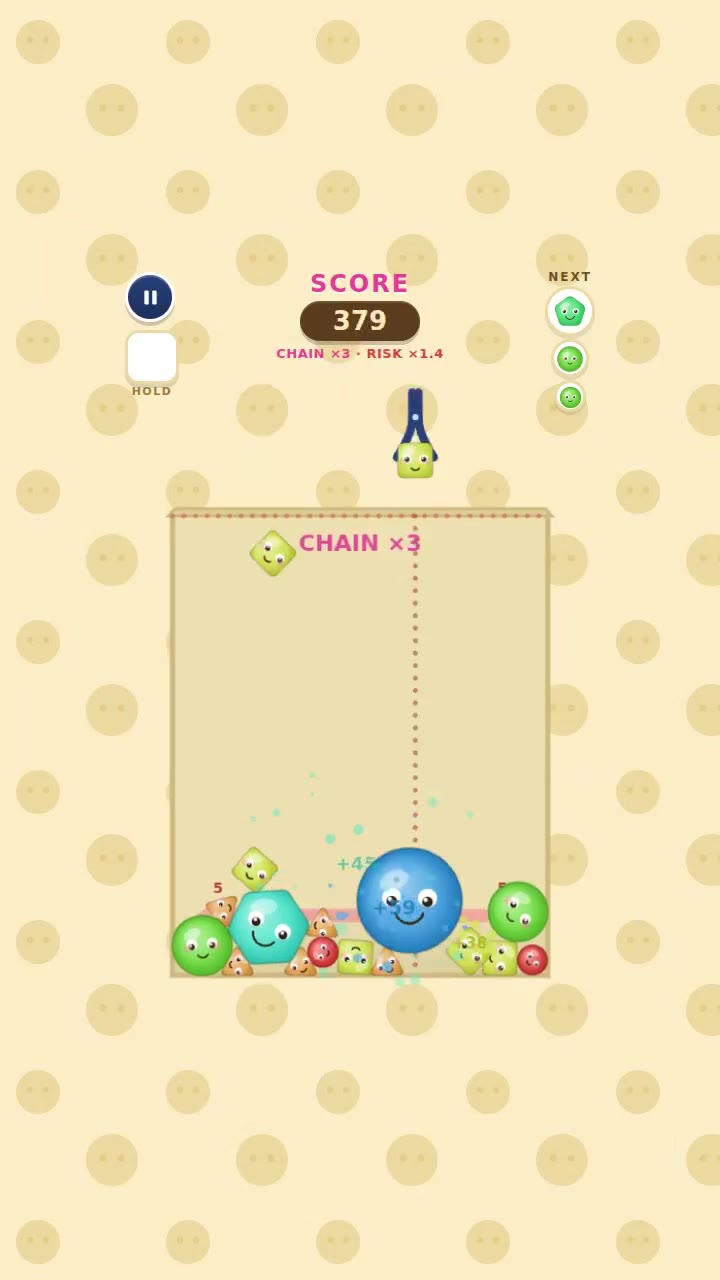
Matching creatures combine when they collide. Physics matters: bodies roll, settle, and push against one another, making a landing position an estimate rather than a guaranteed grid square. A merge can shift the pile enough to create another collision. Closely linked merges build a chain, giving a sequence of interactions more value than a collection of isolated matches.
Wild pieces can combine with ordinary creatures, and the current scoring system includes a risk multiplier based on how full the container is. The side-push controls can also move the pile, with a limited number available in each direction. Together, these systems offer ways to recover an awkward arrangement or pursue a stronger sequence, but they do not remove the need to preserve space.
Crowding creates both opportunity and danger
The run ends when an older, settled creature remains above the brim long enough. A fresh piece passing through the upper area is therefore different from a stable pile that has run out of room. Watch the shape after it settles. A last-second drop into a crowded corner may create a match, but it can also leave a higher obstacle for everything afterward.
My interpretation of the design is that the fuller-container multiplier creates a deliberate tension. A crowded pile can promise more points at the same moment it becomes harder to manage. Hold and the queue supply information and a small amount of control over that uncertainty. This is an analysis of the visible rules, not a developer quotation or a promise that taking more risk always produces a better score.
Give the next piece a job
Begin by looking for a drop that makes a matching pair accessible without burying another useful creature. Check the following pieces before committing, and let the physics finish moving when a chain begins. If a push or wild piece can help, use it to solve an identifiable problem in the pile rather than spending it simply because it is available.
The Daily Challenge uses a date-based piece sequence, while quests track goals such as merges, higher tiers, chains, and scores. Some quests unlock visual skins, giving different ways to judge progress beyond one run’s final number. The gallery shows genuine frames from the official Oppoz preview. Use the verified play link below, watch the queue, and see whether one better-placed drop can create the space your next creature needs.
Inside the game