
Bloom: one quiet move, a whole board transformed
A glowing territory game where patient planning turns a single spore into a sweeping chain reaction. Here is how Bloom works, and why its quiet battles feel so satisfying.
A small board with a big personality
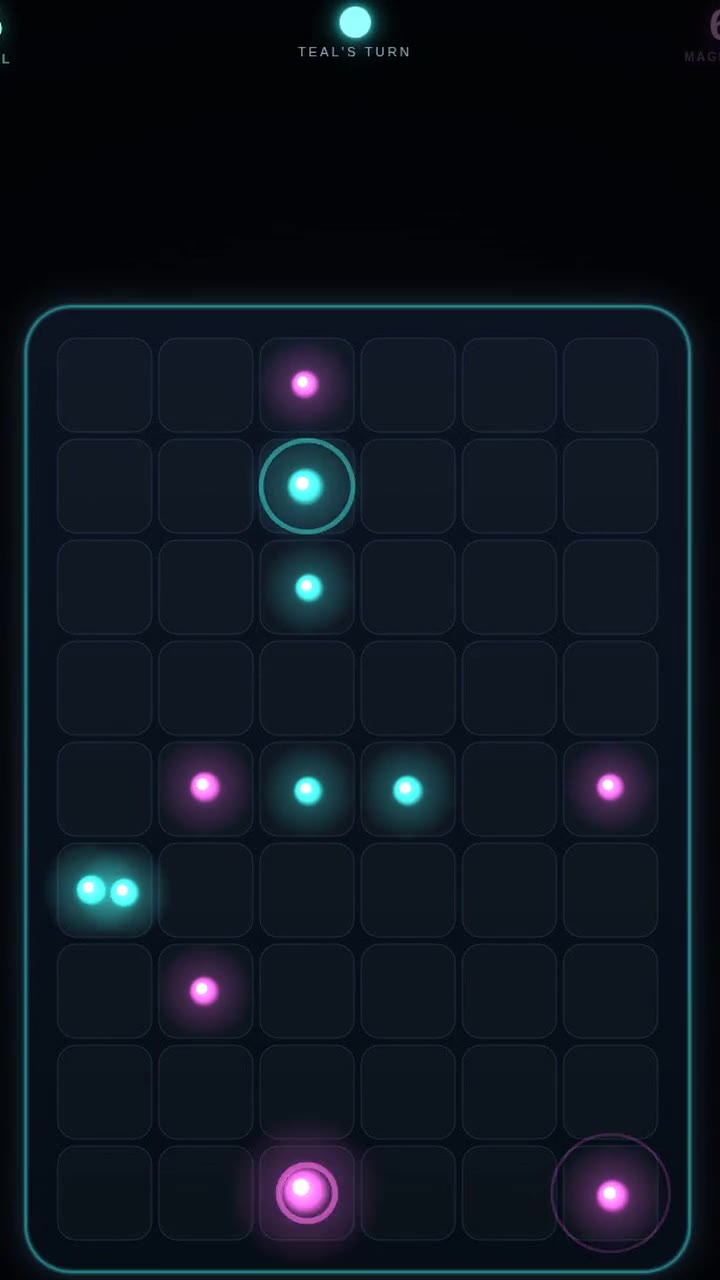
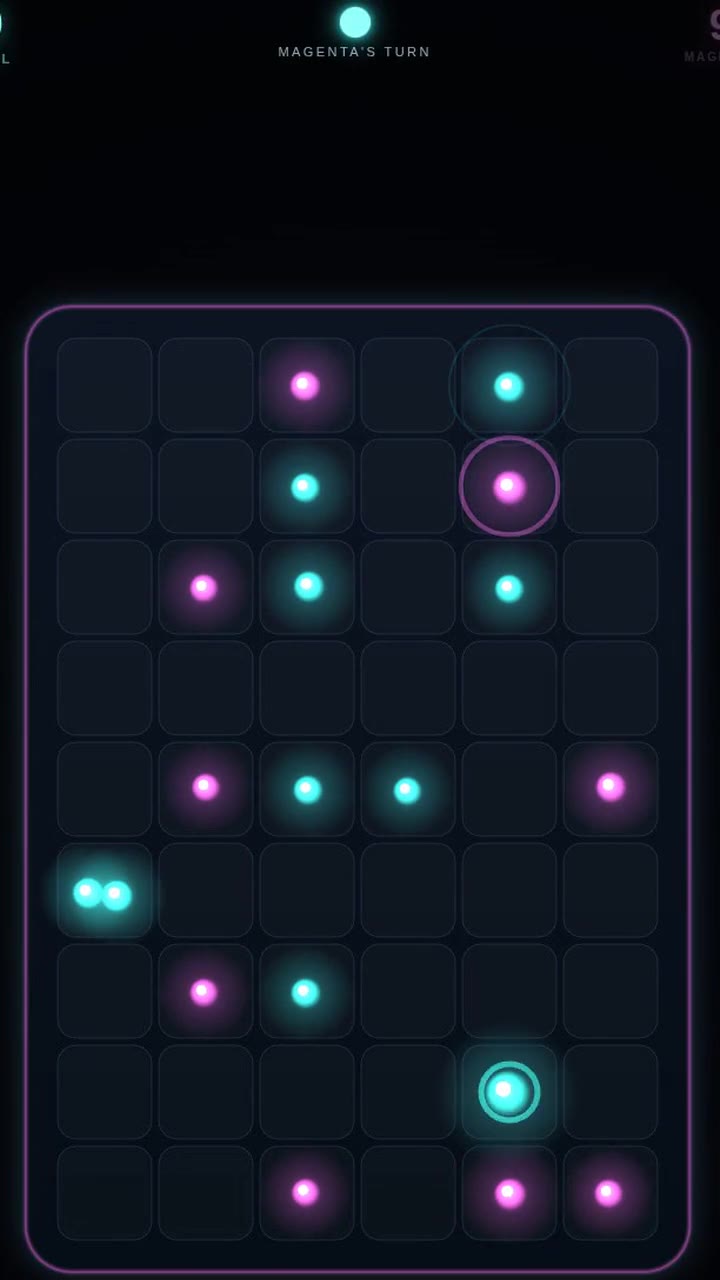
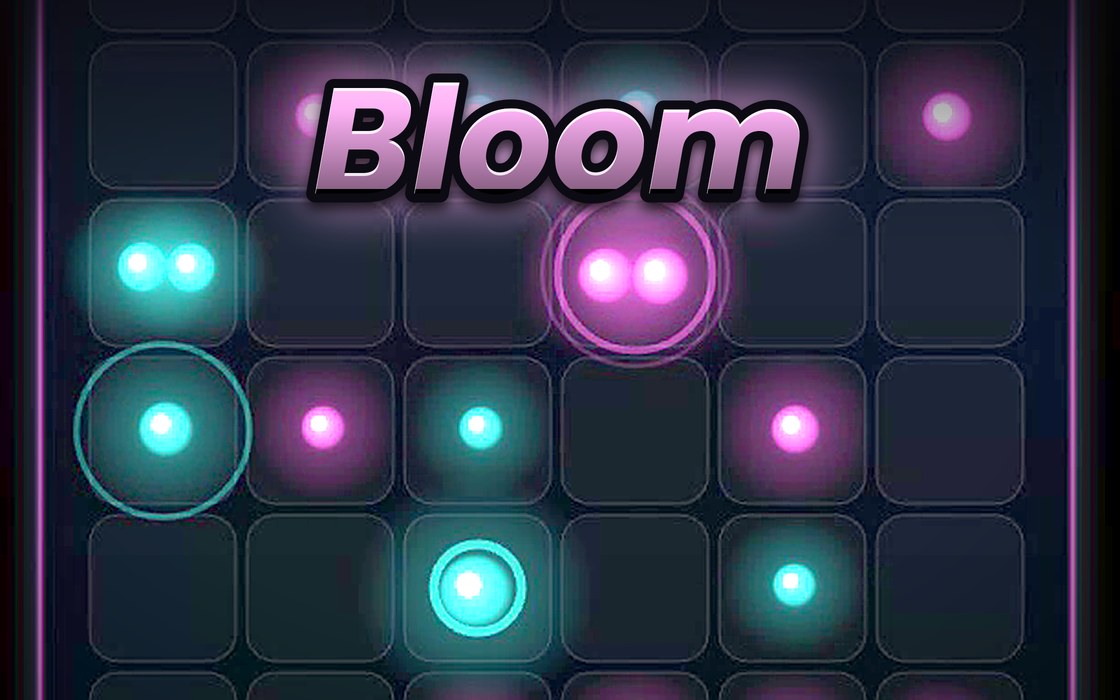
Bloom turns a familiar strategy question — where should I make my next move? — into a luminous contest between teal and magenta spores. Its portrait board contains six columns and nine rows. Instead of armies or elaborate menus, you work with glowing clusters that grow, burst, and spread. The current Oppoz version offers a local two-player mode and a solo match against Spore AI, so you can share the same screen or practise on your own.
The atmosphere is unusually gentle for a territory battle. Bloom describes itself as a quiet chain reaction, and the presentation follows through: breathing orbs, travelling seeds, ripples, and synthesized musical tones make growth feel organic. The rules still create real competition. You are trying to take control of the board, and a peaceful-looking cluster can become the starting point for a dramatic reversal.
How to play: grow, burst, capture
On your turn, tap or click an empty cell or one that already belongs to your colour. That adds a spore. You cannot place directly into an opponent-owned cell, so taking territory depends on the reactions you set up around it. A cell bursts when its spore count reaches its number of orthogonal neighbours: two in a corner, three along an edge, and four in the interior.
A burst sends spores into adjacent cells and brings those receiving cells under the active player's ownership. If a neighbouring cluster reaches its own threshold, it bursts as well. That is the chain reaction at the heart of Bloom. Once both players have made a move, eliminating the opponent's remaining territory wins the match. Watch the whole cascade resolve before judging what your placement achieved; the first burst is often only the beginning.
What makes Bloom distinctive
The different thresholds give the board a geography. Corners react quickly, while interior cells can hold more spores before releasing them. A cluster is therefore more than a patch of colour: its position and charge both matter. A lightly occupied area may be less threatening than a small group poised just below its burst threshold. Counting space alone misses the energy stored inside it.
Bloom also lets the reaction become a performance. Cascades travel in visible waves, and larger chains receive a brief slow-motion emphasis and glow. The musical bursts use a pentatonic palette, which helps successive reactions sound connected rather than like unrelated alarms. These details do not change which move is legal, but they make the consequence of that move easier to follow and more memorable.
The design psychology: anticipation before reward
Our reading of Bloom's design is that its strongest reward begins before anything explodes. A cluster near its threshold invites a prediction: one more spore here might capture that cell, which might trigger the next. The satisfaction comes from making a small, understandable decision and then seeing a larger outcome unfold. This is an analysis of the mechanics and presentation, rather than a claim about private developer intentions.
Turn-taking creates room for that anticipation. There is no need to race a stream of inputs while calculating your placement. You can inspect the board, form a plan, and revise it after the opponent moves. The visible chain gives feedback on your prediction: a successful cascade confirms a connection you noticed, while an unexpected reversal reveals a relationship to study next time. The same simple input can support both a first match and a much more deliberate rematch.
Why it is fun — and a useful first-match tip
Bloom is enjoyable when a board you thought you understood suddenly changes colour. Its pleasure sits between a puzzle and a duel: you build a possible reaction, but another player is changing the conditions around it. Try watching cells one spore below their threshold rather than choosing only the largest empty area. Before committing, trace where the first burst would send its spores and what those recipients would do next.
Spore AI is a useful way to explore those consequences without arranging a second player. The local mode then adds the pleasure of sharing a surprising cascade with someone beside you. Bloom is currently verified live on Oppoz and runs in the browser. Follow the play link below to try the current version; this spotlight does not announce a new release or an unverified external-store launch.
Inside the game