
Bow Brawl: one well-judged arrow can change the duel
Aim through an arc, read the wind, and choose upgrades between rounds. Bow Brawl builds an escalating archery challenge around a simple drag and release.
An archery duel with room to improve
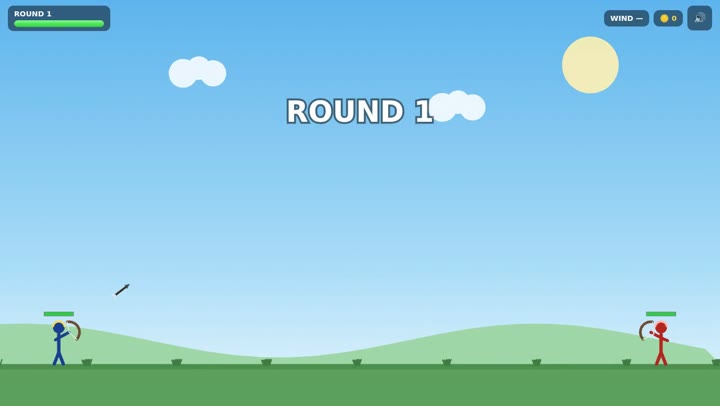
Bow Brawl places two archers across a side-view arena and gives you a clear objective: defeat the opponent and survive the next round. The distance between the characters matters because arrows travel through an arc rather than appearing instantly at the target. A shot is therefore a prediction. You decide on a direction and strength, release, and then see whether the flight matches the line you imagined.
The current Oppoz game pairs that simple aiming task with escalating enemies and a shop between rounds. Early success teaches you the basic motion, but later duels ask for more consistent judgement. It is a browser game about learning a useful shot, then adapting that shot as the conditions become less forgiving. You can enter without memorising a long list of commands.
How to play: pull back and watch the flight
Click or touch, drag to aim, and release to fire. The gesture acts like a pull-back: its direction and length determine the arrow's launch. An aiming preview helps you inspect the intended path before committing. Give yourself a few opening shots to understand how a change in your hand movement affects the trajectory, rather than trying to solve every miss with a larger drag.
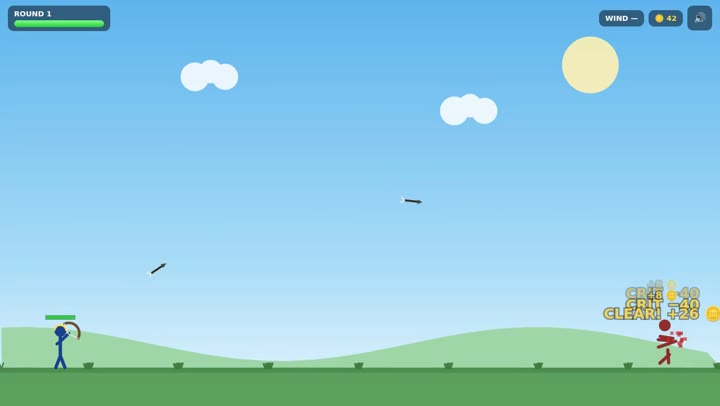
Headshots deal two and a half times the normal damage in the current rules. That makes precise aiming valuable, but it also creates a choice between a dependable body hit and a more ambitious attempt at the head. Wind begins affecting the challenge from the third round, so a shot that worked in calm conditions may need adjustment. Watch the wind indicator and the actual flight instead of assuming one gesture will remain correct forever.
What makes the rounds feel different
Enemy archers become tougher as the rounds advance, with changes to health, damage, firing pace, and accuracy. The game therefore asks you to do more than repeat an opening solution. A slow sequence of tentative shots may become costly when the opponent shoots more effectively. Learning an accurate motion early leaves you better placed to respond when later conditions demand quicker, more confident decisions.
Coins earned during the run let you make another kind of decision between duels. Bow Power increases arrow speed and flattens shots; Sharp Arrows raises damage; Multishot adds arrows to a volley. Eagle Sight lengthens the aiming preview, while Fortitude and Regrowth address health and recovery. These are different responses to a difficult run. Improving your ability to judge a path is not the same as buying the strength to survive a few more mistakes.
The design psychology: a visible cause and effect
Our reading of Bow Brawl's appeal is that it makes learning visible. You perform a compact gesture, watch a recognisable projectile, and see where it lands. When the arrow goes too high or falls short, the next experiment has a concrete starting point. You do not need to understand the game's underlying physics to compare two shots and make a more deliberate third attempt.
This is editorial analysis of the current mechanics, rather than a claim about private developer intentions. The headshot bonus gives that learning an attractive target, while changing wind stops accuracy from becoming purely mechanical repetition. The shop adds a longer decision cycle around the immediate one: aim well enough to clear this round, then spend your reward on the weakness you actually noticed. That connection can make progress feel earned rather than arbitrary.
Why it is fun — and a practical first-run tip
The fun is in the moment an arc you were still guessing becomes one you can judge. A clean hit confirms the adjustment, and a headshot makes the precision especially satisfying. Between rounds, an upgrade gives you another idea to test. Bow Brawl can therefore reward both careful aim and a willingness to change your approach when a familiar shot stops working.
For a first run, prioritise understanding the pull-back and release over chasing every critical hit. Change one part of the gesture at a time, and compare the result with the preview. When wind arrives, treat its direction as new information rather than evidence that your earlier practice was wasted. Follow the play link below for the verified live Oppoz version. This article is a game spotlight, not an announcement of an unconfirmed release on another platform.
Inside the game