
Break Shot: when the pool table fights back
Line up a shot, knock enemies into pockets, and build a stronger cue orb between waves. Break Shot turns billiards geometry into a tactical roguelite.
Billiards becomes a battle arena
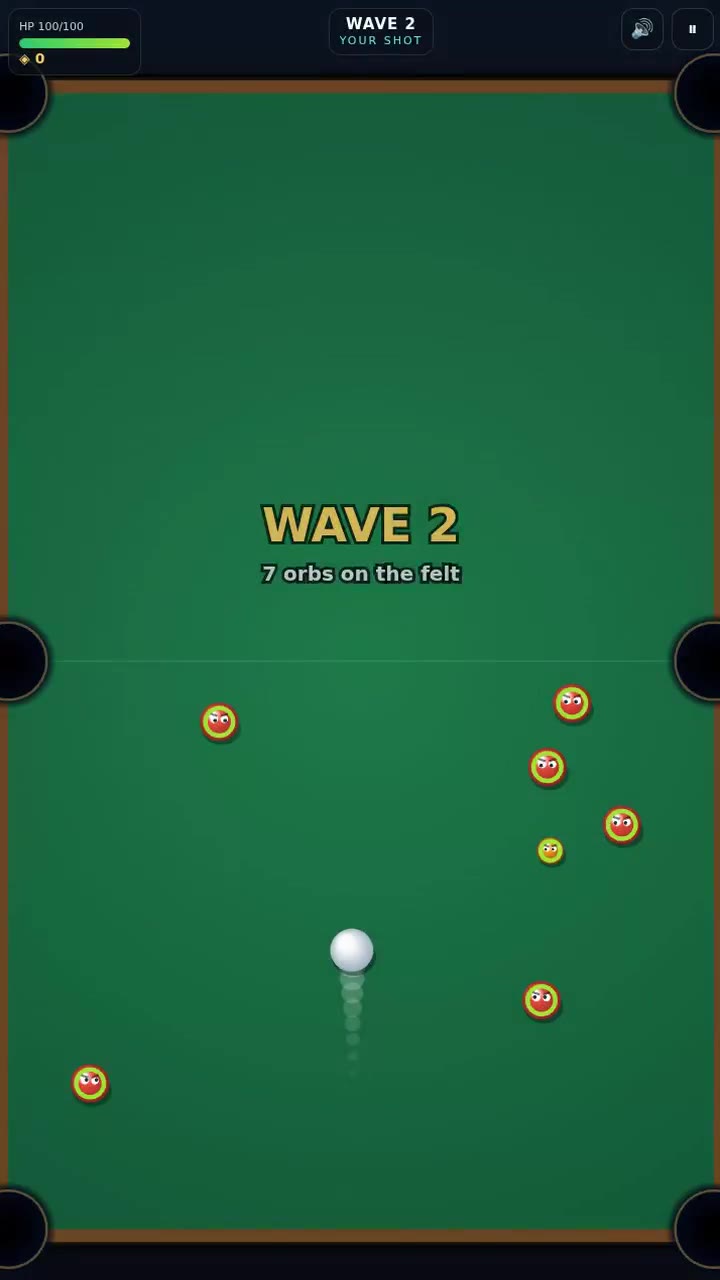
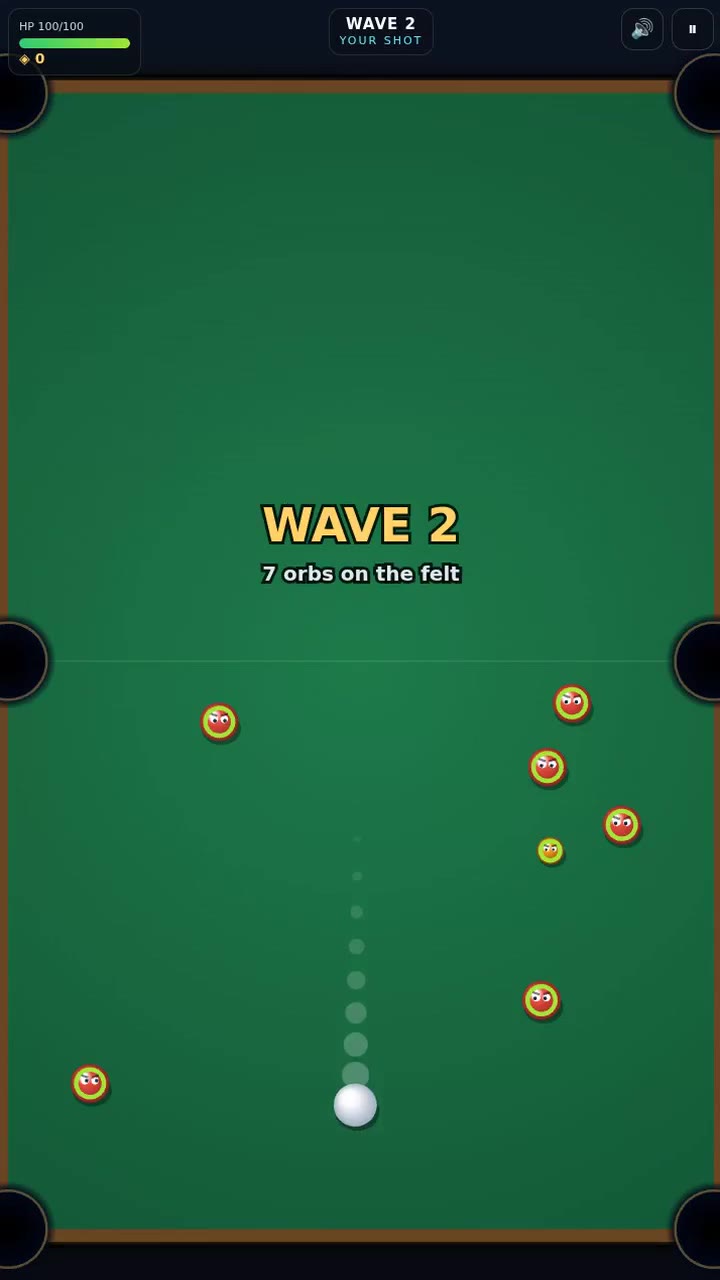
Break Shot: Billiards Roguelite starts with a familiar shape — a table, a cue orb, and six pockets — then changes what the other balls are there to do. They are enemies. Your shot can damage them through impact or remove them by knocking them into a pocket. Any survivors get a chance to lunge back. Clearing the table buys a moment to upgrade before the next wave arrives.
That structure makes Break Shot a meeting point between physical aiming and tactical survival. You are not just trying to make contact. You are choosing which enemies to remove, where your own orb will finish, and whether a promising angle leaves you exposed. The current Oppoz version runs in portrait orientation and uses a drag-and-release action that works with both a mouse and touch input.
How to play: pull back, release, plan the aftermath
During your aiming phase, drag anywhere and release to launch the cue orb. It works like a slingshot: the pull-back direction determines the launch direction, and the length of the drag controls power. Harder collisions deal more damage, but power is only useful when it sends the right objects to the right places. Take a moment to examine pockets, cushions, and enemy positions before releasing.
Pocketing an enemy produces an instant knockout and awards extra gold. Pocketing your own cue orb is a scratch that costs health, so the same openings can be opportunities and hazards. After your shot resolves, surviving enemies retaliate. Once you clear a wave, the shop lets you spend earned gold on upgrades before continuing. Desktop shortcuts include P to pause, M to mute, and R to restart.
What makes Break Shot distinctive
The table is not merely a background for combat. Its geometry is the combat system. You can send enemies towards pockets, use wall rebounds, and knock enemy orbs into one another. A successful plan may produce several useful collisions from one launch. Conversely, a seemingly powerful direct hit can leave a dangerous opponent alive and your cue orb in an awkward position. The interesting question is often what happens after the first impact.
Upgrades let you develop that physical idea into a preferred style. Muscle Chalk increases launch power; Dense Core adds mass and impact damage; Pro Sights improves the aiming guide and eventually previews a bounce. Pocket Magnet helps draw enemies into pockets, while Bank Shot rewards wall rebounds. Defensive options also matter: Leech Felt restores health on knockouts, and Thick Skin increases maximum health while providing an immediate heal. You are choosing how to survive, rather than buying only a bigger number.
The design psychology: prediction, consequence, adaptation
Our analysis of Break Shot's appeal centres on prediction. Before releasing, you imagine a path: hit that enemy, send it towards the pocket, and stop somewhere safer. The moving pieces then make your prediction visible. You can see which part worked and where the plan went wrong. Because aiming and retaliation occupy separate phases, the game gives you room to think before showing the consequences.
The shop adds a second scale of decision. A single shot asks how to solve the current table; an upgrade asks what kinds of tables your build will handle better later. An aiming upgrade can help you understand angles, while a healing choice may keep an imperfect run alive. These are interpretations of the mechanics, not documented claims about developer motivation. They help explain how one simple gesture can produce a sequence of increasingly personal tactical choices.
Why it is fun — and a first-run strategy
Break Shot is fun when an ordinary-looking line becomes a clever solution. A bank that finishes an enemy, a pocket knockout that avoids a long damage exchange, or a multi-enemy collision can make a single turn feel inventive. The upgrade phase gives you something to reconsider after each success. You do not need to reproduce one perfect sequence; you can look at what the current run is good at and lean into it.
For your first attempt, prioritise clean pocket opportunities and watch where the cue orb will finish. A maximum-power release is not automatically the safest move. Learn how enemy retaliation changes the value of leaving an opponent alive, then choose upgrades that address the mistakes you are actually making. Break Shot is verified live on Oppoz. Follow the play link below to try the current browser version; this article is a game spotlight, not a claim of a newly verified launch on another platform.
Inside the game