
Bridge Courier: plan on the islands, keep moving on the timber
Carry three parcels across collapsing bridges, using safe checkpoints and a limited brace to reach optional stamp detours.
A delivery route that changes behind you
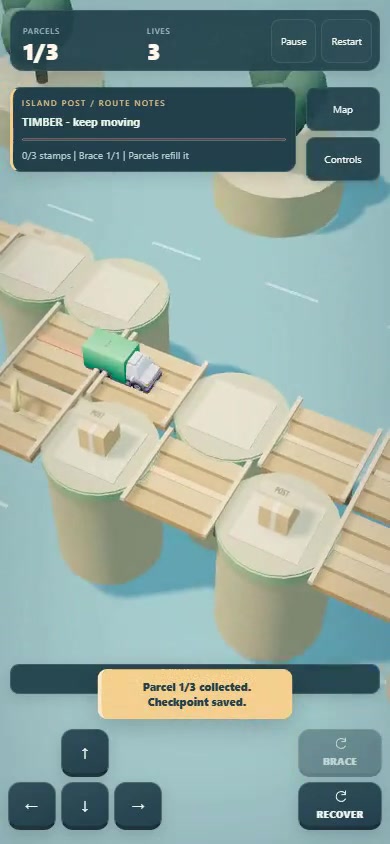
Bridge Courier sends a small delivery vehicle across a chain of islands and wooden bridges. The basic objective is to collect three parcels, then reach the harbour. The complication is that timber begins collapsing when you arrive on it and deteriorates quickly after you leave. A route that was safe moments ago may no longer support a return trip.
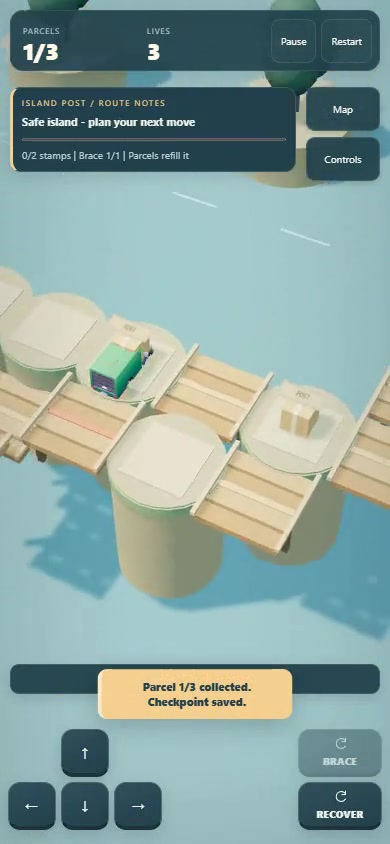
The current game contains twenty-four routes. Stone islands provide places to pause and plan, while bridge tiles ask for decisive movement. Optional stamps sit on detours from the delivery route. Those extras create a second question beyond simply reaching the next parcel: can you leave the main path, collect a stamp and get back before the connection disappears?
Move one tile at a time
Use the arrow keys, WASD or the on-screen directional buttons to move. Holding a direction continues the movement across tiles. You can also tap an adjacent tile to drive there. The vehicle does not automatically choose a safe route for you, so inspect which neighbouring spaces actually exist before committing. Driving into water or onto a collapsed tile costs a life.
The map and follow views give different ways to inspect the route. Use a safe island to understand the next stretch before starting across it. Once on timber, keep moving toward another stable landing. The status panel identifies whether you are on a safe island, ordinary timber or a reinforced tile, and the remaining timber time makes the immediate risk visible.
A brace buys a brief return window
B or BRACE reinforces the current timber tile. You carry one brace at a time, and collecting a parcel refills it. A brace does not turn a bridge into a permanent island. It extends the time available and lets the tile survive a quick out-and-back movement, which is useful when a stamp lies just off the main route.
Plan that detour before moving. Identify the tile you need to return across, reinforce it while you are on it, then collect the stamp and come back promptly. The brace cannot help if you wait until the connection is already gone. Its limited supply also makes the next parcel relevant to planning: reaching that safe collection point gives you another brace for a later decision.
Checkpoints protect progress, not every life
Safe islands act as checkpoints. After a fall, the vehicle returns to the saved island state, while collected deliveries remain recorded. Recovery also restocks the brace. This makes a mistake recoverable without requiring you to repeat every earlier pickup, but each recovery still consumes one of the three lives available for the route.
If you become stranded, R or RECOVER requests a return at the cost of a life. Use it as a recovery option rather than a free movement tool. Losing all three lives ends the delivery. At the harbour, all three parcels must be collected before the route can finish; arriving early is not a substitute for visiting the delivery pickups along the way.
Learn the main route before pursuing every stamp
For a first attempt, prioritize the three parcels and the harbour. Pause only on islands, locate the next stable landing and cross the connecting timber without an unnecessary reversal. This establishes the route's basic rhythm. On a later attempt, add one stamp detour and work out where a brace is needed. Separating the delivery route from the bonus route makes a failed experiment easier to understand.
The optional Postmaster Seal requires every stamp with no lives lost. That turns completion into a more exact routing challenge. Move count also matters to the strongest star result, so a safe but wandering route may have room for improvement. Look for decisions you can make before leaving an island, instead of spending fragile bridge time deciding which direction to try next.
Why stable ground changes the pace
Our design reading is that the contrast between islands and timber gives the game its rhythm. Safe ground allows observation; a bridge turns that plan into a short commitment. Seeing a tile crumble behind the vehicle makes the cost of hesitation visible. The brace adds a limited exception to that rule, creating room for deliberate detours rather than making every crossing identical.
These are observations about the implemented mechanics, not claims about a developer interview or measured player psychology. Checkpoints soften the cost of learning while the no-loss stamp goal preserves a harder challenge. Together, they give a route more than one useful finish line: first deliver the parcels, then return to make the whole journey cleaner and more complete.
Verified destination and image sources
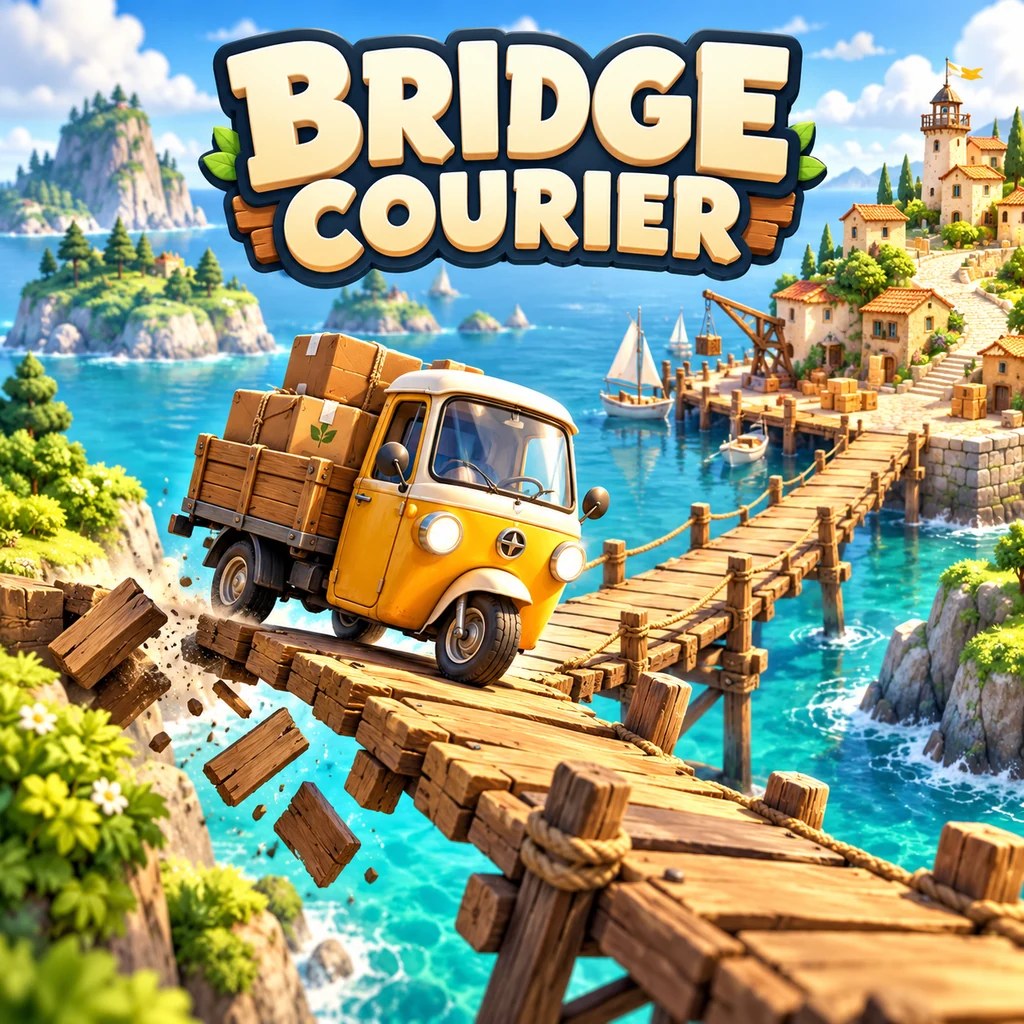
Play the verified release through the Oppoz link in Where to play below. The screenshots are genuine frames from the official preview, and the cover is promotional artwork. Checks of CrazyGames, Playgama and Google Play did not verify a matching external release for this exact title. Those platforms remain unverified for this game, rather than being declared unavailable based on search results alone.
Inside the game