
Clean Sweep: find a calm rhythm between the mess and the dock
Guide a little cleaning robot through twelve rooms, choosing tools, planning dock visits and using a power-limited scanner.
A room-sized task with visible progress
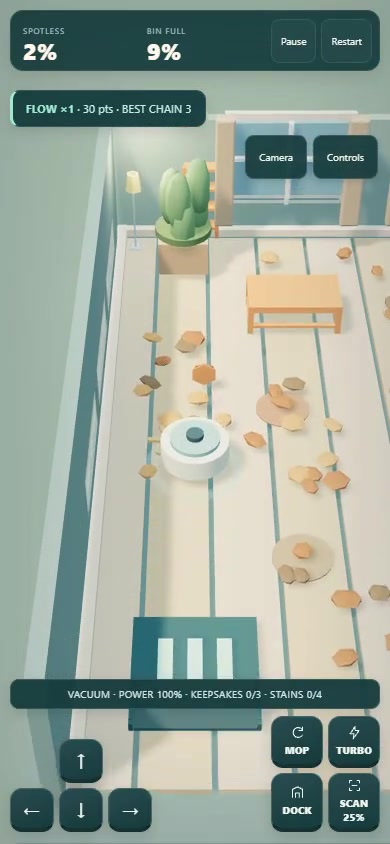
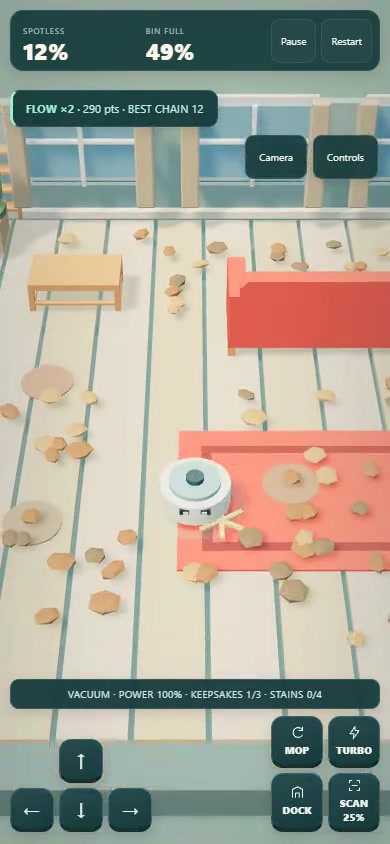
Clean Sweep gives you a little robot, a furnished room and a straightforward objective: sweep every last speck. Debris disappears as you collect it, the cleanliness percentage rises, and the furniture gradually becomes easier to read without the surrounding mess. The game’s twelve rooms provide a compact setting for planning a route and watching that plan produce a visible result.
There is no timer pressure. You can take a cautious route around a table, return for a missed corner or stop to decide which tool you need. That does not remove every decision. The bin has limited capacity, power is shared between useful abilities, and different kinds of mess require different treatment. The challenge comes from organizing the work rather than beating a countdown.
Guide, vacuum and mop
Drag on the floor to guide the robot, or use the arrow keys, WASD or the direction pad. Furniture affects the available route, so a destination on the other side of a room may require going around an obstacle. Move through ordinary debris with the vacuum equipped. T or the tool button switches between the vacuum and mop.
Stains require the mop and a little patience: stay over a stain while it is polished away. Passing over every patch at full speed can leave this part of the job unfinished. The display tracks keepsakes and stains separately, helping you understand why a mostly tidy room has not yet reached completion. A scan can help with searching, but it does not replace selecting the correct tool.
The dock makes route planning matter
Collected mess fills the robot’s bin. When it is full, return to the mint-colored dock to empty it. The dock also replenishes power. A good route therefore has two destinations in mind: the next useful patch of mess and a sensible way back to service the robot. Going far from the dock with an almost-full bin can create a long trip that produces little new progress.
Try cleaning a nearby cluster, then extending outward in manageable loops. You do not have to follow a rigid pattern, but it helps to know which part of the room you intend to finish before your next dock visit. The resulting journey can feel purposeful even when it is slow. You are managing a small workspace, not merely steering toward whichever particle happens to be closest.
Power creates a choice between reach and information
Hold Space or TURBO for wider suction. Turbo spends power, so it is worth using when several useful pickups are within reach. It is not a substitute for choosing a sensible route or clearing the bin. Ordinary operation lets power recover gradually, while visiting the dock provides a stronger opportunity to recharge.
Q or SCAN spends 25 percent power to reveal nearby remaining mess for five seconds. That makes information a resource decision. A scan can be particularly helpful when furniture hides the last few pieces or a room appears cleaner than the progress display suggests. Spending power on searching leaves less immediately available for turbo, so decide whether your current problem is finding the work or collecting it.
Flow without a deadline
Linking pickups builds a flow multiplier. This adds an optional rhythm inside an otherwise unhurried task: a dense patch invites you to connect several collections, while a longer journey may break that sequence. You can pursue tidy chains for the satisfaction of a smooth route without needing to turn the entire room into a frantic race.
For a first attempt, focus on learning the room and noticing which marks remain after ordinary vacuuming. On a replay, improve one detail: reduce unnecessary dock travel, collect a denser group before changing direction, or reserve enough power to inspect an awkward corner. Those goals emerge directly from the tools and resources already on screen.
Why cleaning can feel rewarding
The game supplies unusually direct evidence that your actions mattered. A pickup removes a visible piece of clutter; a stain shrinks as it is treated; the bin and cleanliness displays make progress concrete. Our design interpretation is that this combination supports a comfortable sense of agency. The room is understandable, and small actions create readable changes. This is analysis of the mechanics, not a reported statement of developer intent.
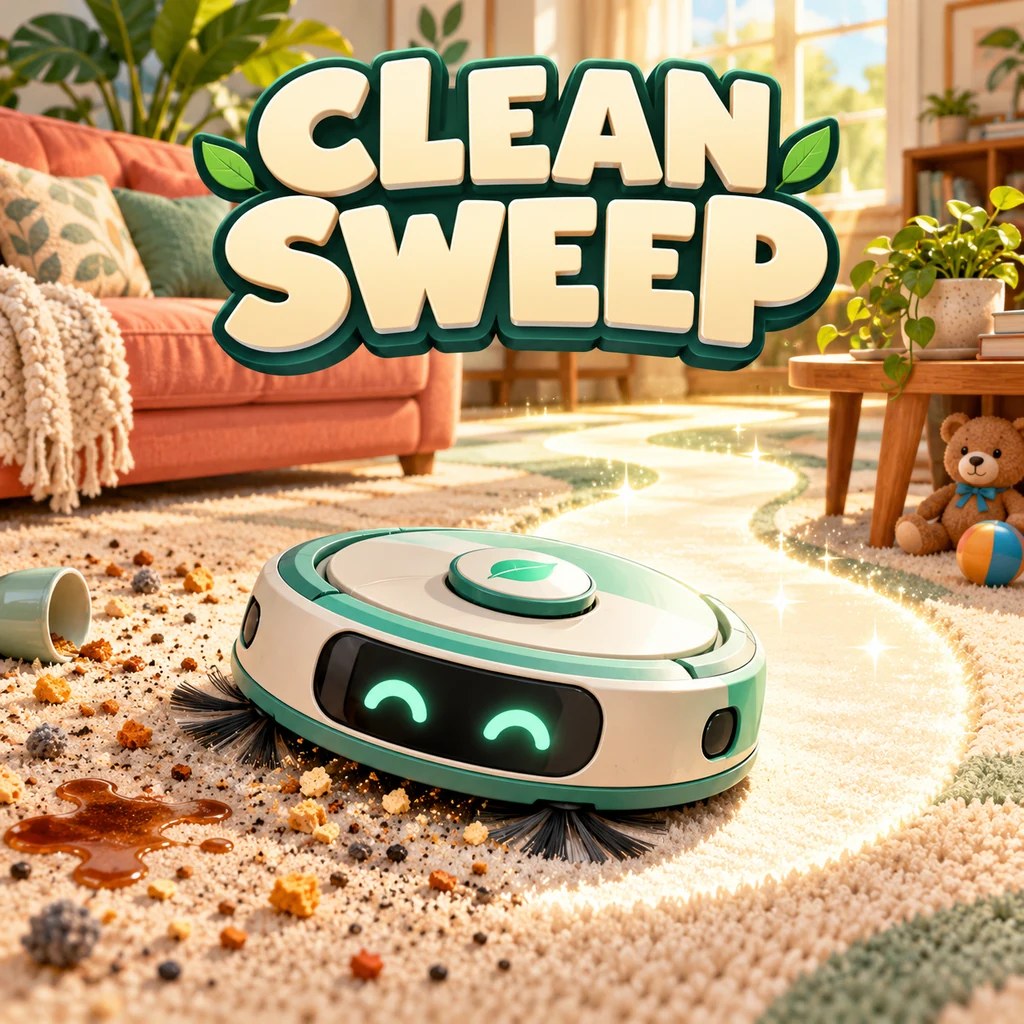
Play Clean Sweep on Oppoz using the verified link below. The gallery uses genuine frames from its published gameplay preview, alongside the official promotional cover. Matching portfolio releases on CrazyGames, Playgama and Google Play remain unverified. Several similarly named Google Play utilities and service apps belong to other developers and are not this game; they are deliberately excluded from the play links.
Inside the game