
Coconut Drop: a beachside catching game with a mischievous streak
Catch the good drops, dodge the dangerous ones, and keep your combo alive. Coconut Drop adds weather, surprises, and precision to a simple arcade idea.
A simple job under a busy palm tree
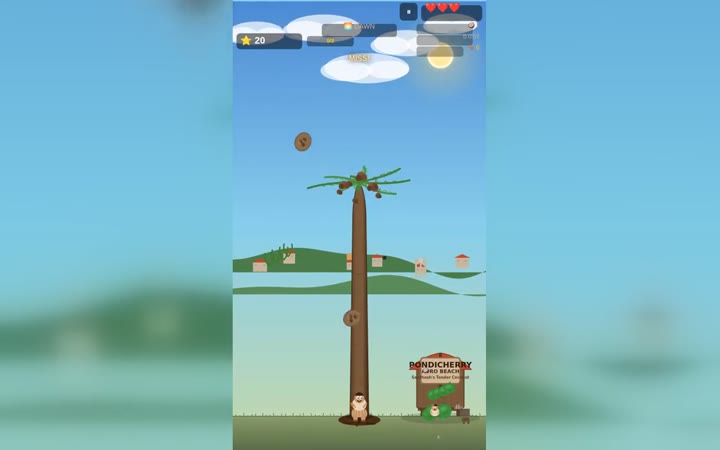
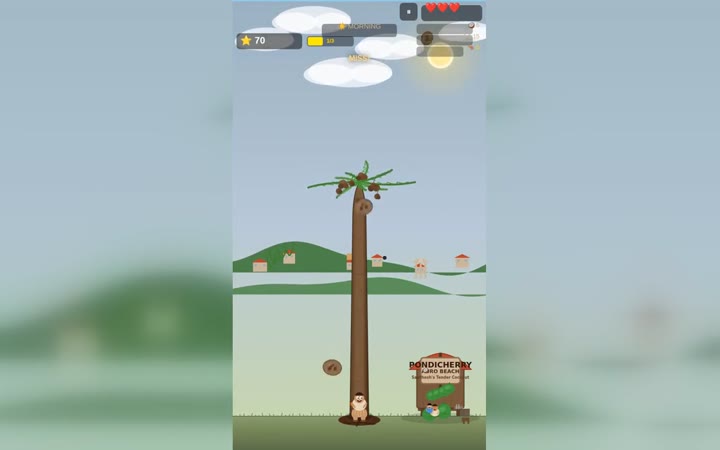
Coconut Drop begins with an easy-to-understand job: move beneath a palm tree and catch falling coconuts. The beach setting, bright sky, and playful characters suggest a relaxed outing, but the objects coming down are not all equally welcome. Some are valuable, some are dangerous, and the scene can introduce new hazards as the run continues. Paying attention becomes more useful than automatically chasing everything that falls.
The current Oppoz game presents its setting as Pondicherry's Auro Beach. That local flavour gives the catching challenge a particular personality without changing the clarity of the main action. Your attention moves between the player near the bottom, the objects travelling downwards, and the conditions around the tree. It is a small playing space with several reasons to keep looking up.
How to play: move, jump, choose your catch
On desktop, move left and right with the arrow keys, A and D, or the mouse. Jump with Space, Up, or W. The touch instructions describe touching or dragging sideways to move and tapping to jump. The current rules start the standard challenge with three lives. Before trying to maximise your score, get comfortable lining up with a falling object and making a deliberate move away from something dangerous.
A normal coconut awards ten points, a golden one fifty, and a rare diamond one hundred. Rotten coconuts cost a life. Successful catches build a combo that multiplies scoring, while precise catches can earn a perfect bonus. That means movement has two jobs: reach the right object, then arrive well enough to make the catch count. The highest-value drop is not automatically worth abandoning a safe position for.
What keeps the beach from becoming predictable
The game's hazards extend beyond rotten coconuts. Its instructions warn about snakes falling from trees, lightning during storms, and ghosts that appear at night. Wind can push coconuts sideways, changing the path you thought you had measured. A monkey named Sudharson can steal, throw, or laugh. These details give the environment a mischievous role instead of leaving it as a static backdrop behind the score.
Power-ups create occasional opportunities to change the situation. The current game includes effects such as magnetism, slow motion, and shields, alongside other bonuses. Their value depends on what the run is asking of you. Slowing a busy moment is different from simply adding points, and protection can matter when hazards make an otherwise tempting catch risky. The familiar catching action remains central while the surrounding conditions ask you to adjust.
The design psychology: attraction versus restraint
Our interpretation of Coconut Drop's design is that it makes choosing not to catch something part of the skill. A falling object naturally draws the player's attention. Giving objects different values and consequences turns that attraction into a decision: should you follow it, wait for a better opportunity, or move away? The important distinction is between reacting quickly and reacting appropriately to what is actually falling.
This is editorial analysis of the live game's rules, not a claim about private developer motivation. Combos make a sequence of good catches feel connected, while perfect bonuses give accurate positioning an extra purpose. Weather and special hazards can interrupt a comfortable routine. Together, those systems explain how a straightforward left-right action can support both a welcoming first attempt and a more demanding effort to play consistently.
Why it is fun — and a first-run priority
Coconut Drop is fun when the beach starts to feel readable. You recognise a good drop, avoid a rotten one, and keep moving as wind changes the next path. The characters and interruptions add humour to that process, while a growing combo makes the clean catches feel like part of a run rather than isolated successes. A missed opportunity can also teach you to choose a safer position next time.
For your first attempt, prioritise recognising the object types and protecting your lives. Let a risky bonus go if reaching it would carry you into a hazard, and practise lining up normal catches before pursuing every rare drop. Once that feels comfortable, look for precise catches and longer combinations. Coconut Drop is verified live on Oppoz, and the play link below opens that browser version. This spotlight makes no unverified claims about external-store releases.
Inside the game