
Counterweight: Follow the Balance Point Before the Beam Tips
Move a blue counterweight against three travelling loads, using a rechargeable brake to buy adjustment time.
Balance is a moving target
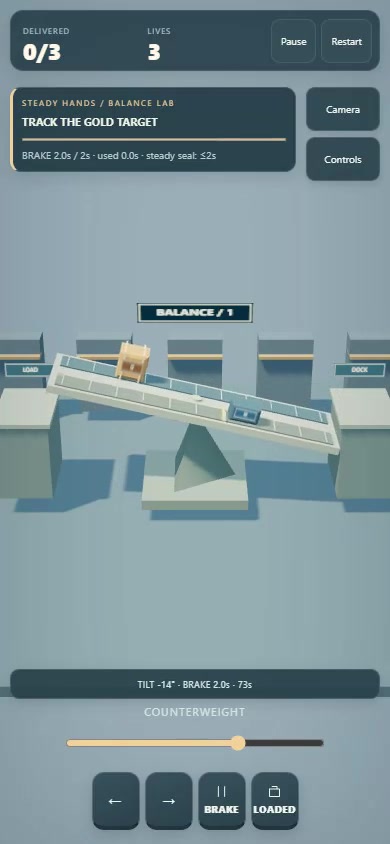
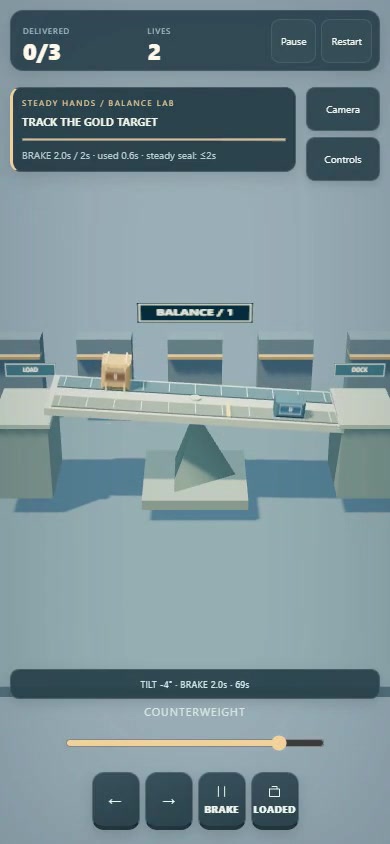
Counterweight places a moving cargo load and a sliding blue weight on a pivoting platform. Your task is to carry three shipments across without letting the beam tip far enough to drop them. The load keeps changing position, so the correct counterweight position changes throughout the crossing. Finding balance once is only the beginning; keeping it requires continuous adjustment.
The game has 24 jobs with variations in cargo mass, conveyor speed and wind disturbance. Each job asks for three successful deliveries, with three lives available and a 75-second active shift limit. A gold marker shows the current balance target. That visible reference makes the challenge about tracking and control, rather than hiding the desired position behind a calculation you must perform yourself.
Load, track and correct smoothly
Move the counterweight with the slider or hold the left and right controls. LOAD or Space starts the current shipment. Before starting, inspect the cargo and the gold target so you understand which side of the pivot needs the blue weight. As the shipment travels, follow the marker across the beam rather than leaving the weight at its initial setting.
The slider sets the position you want, while the counterweight takes a little time to move there. A large last-second correction is therefore less reliable than a series of smaller adjustments. The beam also has angular motion: bringing the weight to the target does not necessarily erase an existing tilt immediately. Watch both the marker and the platform's response, especially after an overcorrection.
Use the brake to recover control
Hold BRAKE or B to slow the conveyor while reserve remains. The brake starts with two seconds available and recharges when released. It slows the load dramatically rather than making it completely stationary. This buys time to move the blue counterweight closer to the balance target, but it does not do that correction for you.
A short brake application before the platform becomes badly tilted is usually more useful than holding it after control has already been lost. Release once the weight is approaching the right place so the reserve can recover and the shipment can advance. The interface displays remaining reserve and accumulated braking time, making it possible to distinguish a brief recovery from using the brake as a permanent substitute for tracking.
Read danger before a load drops
The platform warns you as the angle becomes dangerous. A sustained excessive tilt causes the current cargo to fall, removing a life. The game then prepares another attempt at that shipment; deliveries already secured remain counted. Three dropped loads end the job, while running out of active shift time also prevents completion. A mistake is recoverable, but it leaves less room for the remaining work.
For the strongest ordinary result, finish without drops and keep peak tilt below the game's tight threshold, roughly fourteen degrees. The Steady Hands seal adds a total braking allowance of no more than two seconds across the job. That total is different from the rechargeable reserve shown during a shipment. Even if you recharge successfully, repeatedly spending the reserve can put the seal out of reach.
Why the marker does not remove the challenge
Our interpretation is that showing the desired balance point shifts the challenge toward execution. You can see where the weight should be, but moving it there at the right time while the cargo advances still takes attention. The gap between a target and a moving system's response creates the interesting part. This is analysis of the implemented mechanics, not a statement about an undocumented development brief.
The three-load structure also asks for consistency. A single good crossing demonstrates the idea, while later shipments require you to apply it again with a different load. The brake offers a limited way to interrupt a developing mistake, and the tilt display makes the consequence visible. The satisfying result is a nearly level crossing produced by small corrections rather than a dramatic rescue at the edge of failure.
For an early attempt, aim to keep the blue weight near the gold marker and use a brief brake whenever you fall behind. On a replay, work on anticipating the marker's movement so you need fewer corrections. Improve one thing at a time: first secure all three loads, then reduce peak tilt, and only then try to stay within the seal's total braking limit.
Where to play
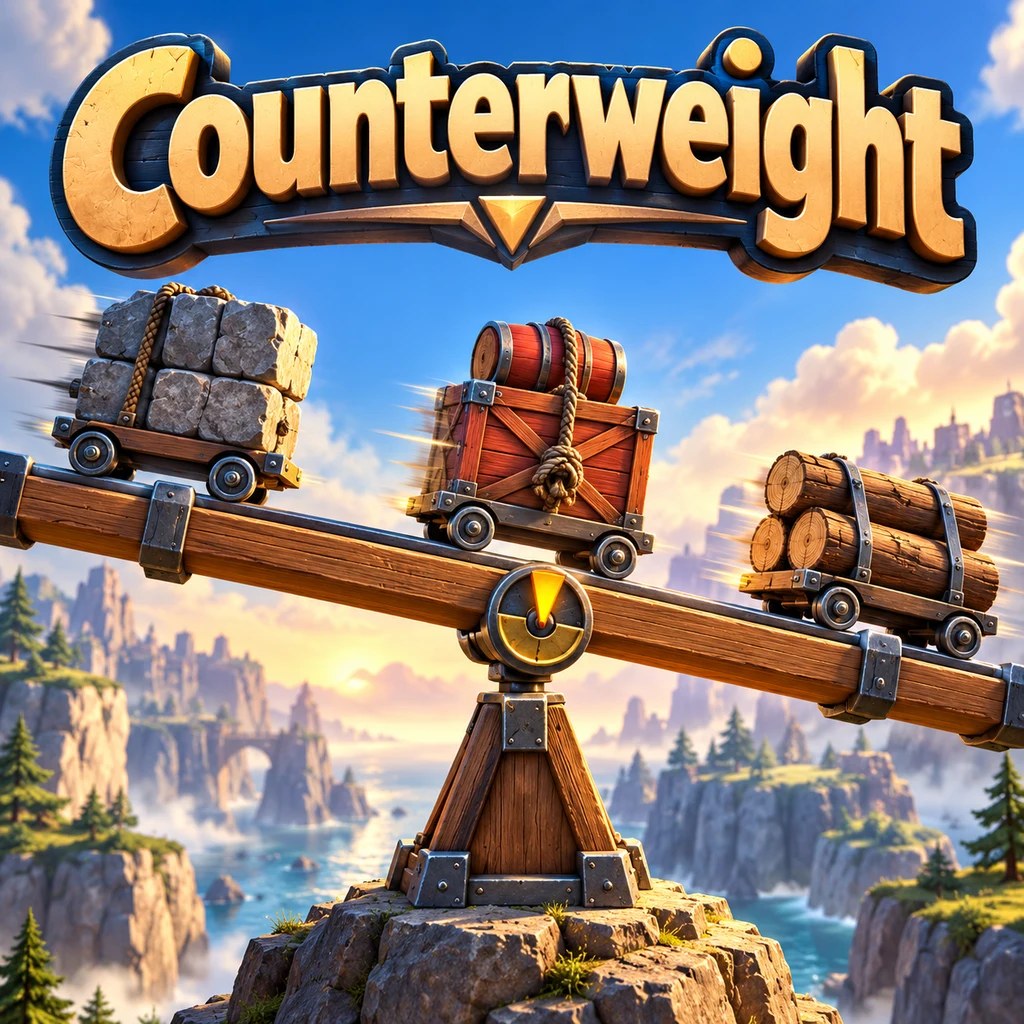
Play Counterweight on Oppoz through its verified link below. We have not established matching live releases on CrazyGames, Playgama or Google Play for this exact game. The two gameplay images are genuine frames from its official Oppoz preview; the cover is separately identified as promotional catalogue art.
Inside the game