
Ganesh Chaturthi Simulator: prepare, welcome, and follow the aarti
Explore a first-person festival room through decoration, offerings, visitors and circular aarti interactions.
A festival built from things you do
Ganesh Chaturthi Simulator on Oppoz places you inside a small first-person celebration space. You prepare the room, arrange offerings, perform aarti, welcome visitors and get ready for visarjan. Progress comes from interacting with objects and completing the current phase’s checklist. The room becomes the record of your work as decorations, offerings and later lighting appear.
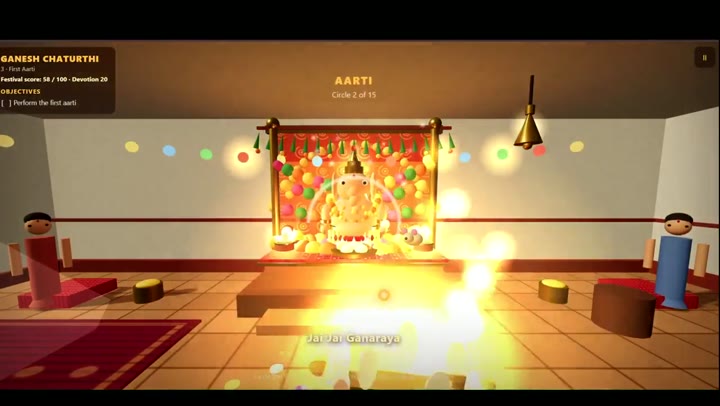
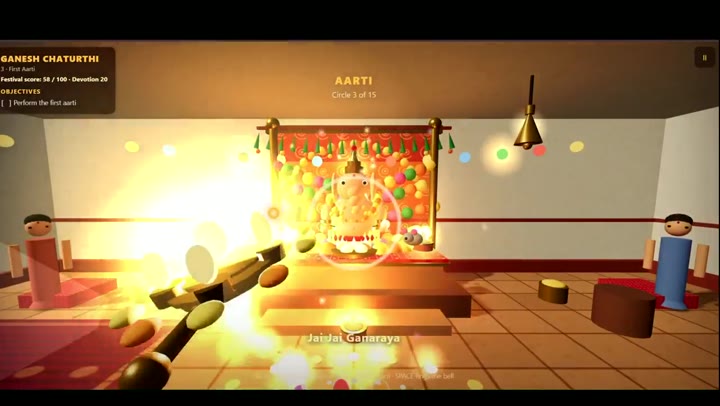
This is a festival simulation with a sequence of authored tasks. It represents a particular game’s celebration, rather than a complete guide to every family’s observance. Its appeal lies in participating in those tasks: looking around, finding the next object, and seeing a modest room become a prepared space. The official preview images show the aarti interaction in progress, not an invented scene.
Moving and interacting
On desktop, use WASD to move, the mouse to look, E to interact, Space to ring the bell, and Escape to pause. The view shows a prompt when you aim at an available object. On touch screens, drag the left half to walk and the right half to look. Tap an object or use INTERACT, and use the BELL control for the bell.
The objectives panel is your best starting point. Available tasks belong to the current phase; trying a later task prompts you to finish the current phase first. Some actions require an item. Serving prasad, for example, means collecting the thali from the counter before approaching the relevant visitor. If nothing happens, read the prompt and check what you are carrying before repeatedly pressing interact.
From preparation to aarti
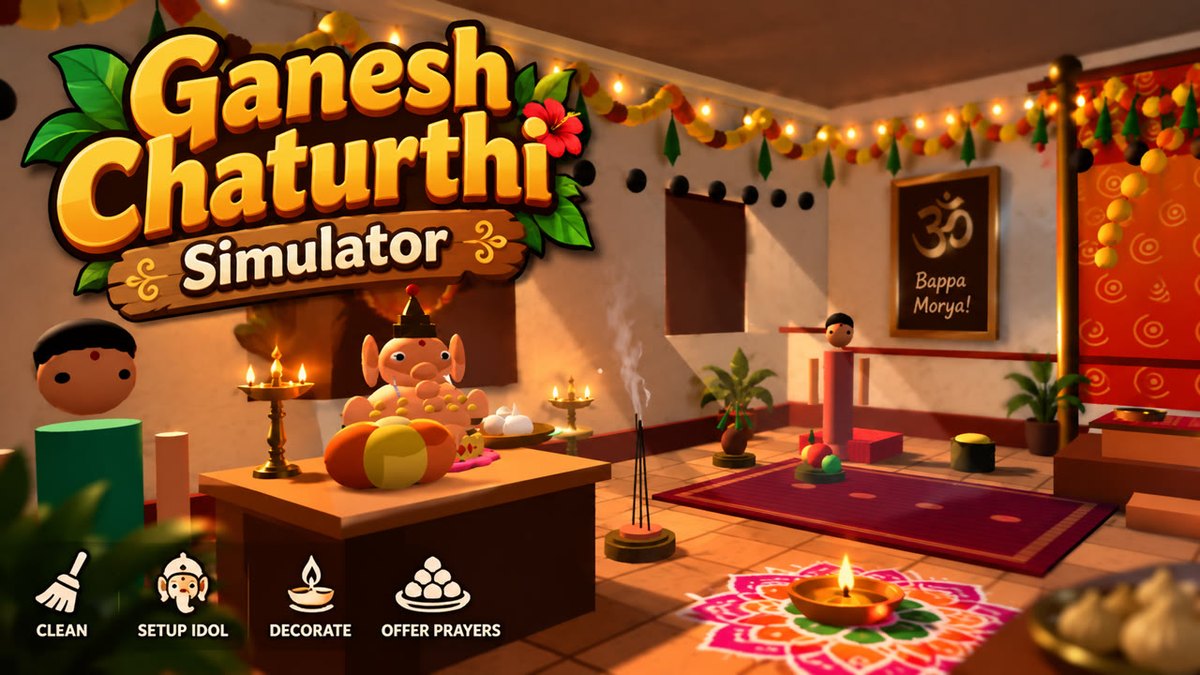
The opening phase asks you to clean the area, place the Ganesh idol, arrange marigolds, set up lights and create rangoli. Puja preparation then introduces diyas and offerings including modaks, fruit, coconut, incense and a kalash. Several tasks have multiple steps, so a partially completed checklist item can mean there is another object to find within the room.
Aarti changes the interaction. Taking the thali brings up a circular guide and chant progress. Move it clockwise in circles; the game tracks completed swings and supplies feedback if you turn the wrong way or hold too close to the centre. The bell remains available. Watch the actual circle target displayed in this build rather than assuming every aarti uses the same fixed number.
Welcoming visitors and finishing the sequence
After the first aarti, the game asks you to serve prasad, help with a flower offering, welcome a visitor and clear leaf plates. Evening celebration adds lighting and more prasad, followed by the final aarti. The last phase clears offerings and flowers, places the idol on a cart and opens the door. The completion screen marks the festival as ready for visarjan.
The current implementation calculates festival progress from completed objectives and also displays devotion points. These are game feedback systems. They help distinguish finishing the room’s sequence from additional interactions such as ringing the bell. A useful first attempt is to follow the phases without hurrying, learn the room’s counters and shrine, and return to the checklist whenever you lose your place.
Why this quieter loop works
My design interpretation is that the game builds satisfaction through visible completion and continuity of place. You are not selecting isolated tasks from a menu; you move through the same room as its state changes. Clearing a checklist item and seeing the result reinforce each other. That makes preparation itself part of the experience rather than something skipped before the main event.
The circular aarti movement also asks for a different kind of attention from walking and tapping objects. Repeated motion, sound, the illuminated shrine and progress feedback give that section its own pace. This is an analysis of what the game presents, not a documented statement of developer intent or a claim about religious experience. Play the verified Oppoz version below, follow the room’s prompts, and let the change from preparation to evening guide your session.
Inside the game