
Hapka Rush 3D: read the order, build the dish, keep the streak
Tap ingredients into the wok in sequence while the order queue loses patience. Hapka Rush 3D turns a short cooking shift into a test of accuracy and rhythm.
The rush begins with one clear order
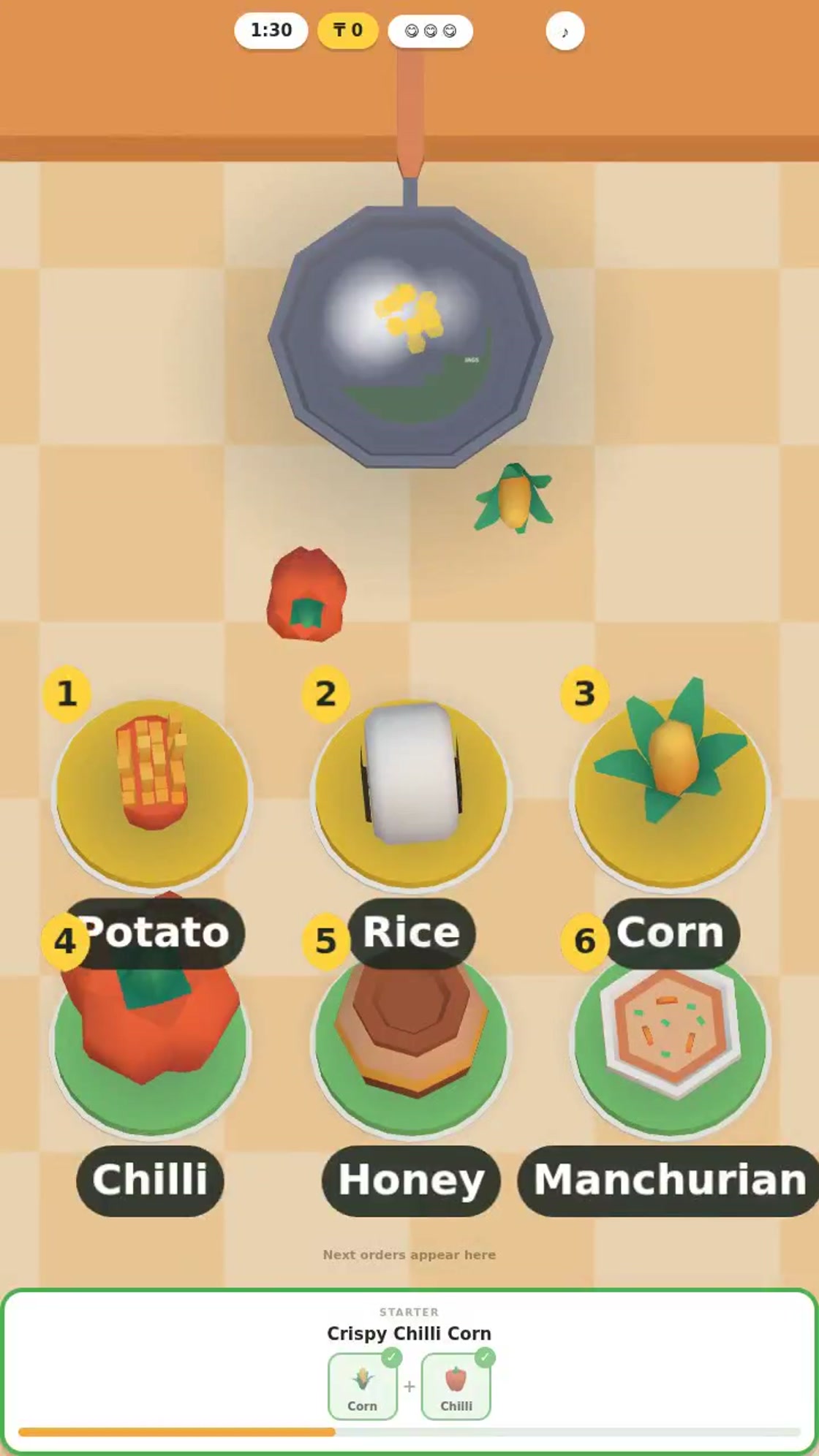
Hapka Rush 3D puts a wok above a tray of colourful ingredients and an order card below it. You prepare the active dish by selecting its ingredients in sequence. The food then cooks and serves automatically, making room for the next request. The aim is to earn tips through a busy shift without letting too many waiting orders walk away.
The verified Oppoz build presents the game in portrait, with a ninety-second clock and space for one-thumb play. Its opening order teaches the process before the queue grows. A dish can be simple to recognise and still demand attention, because the next useful ingredient is determined by the card, not by whichever item looks easiest to tap.
How to play: follow the recipe sequence
Tap or click the ingredient tiles in the order shown. On desktop, number keys one through six select the corresponding tray slots. The active card records the ingredients already added, so use those marks to keep your place. After the final correct ingredient, wait for the brief cooking and serving animation; there is no separate timing minigame or manual serve button to master.
An incorrect selection breaks the clean-dish combo and reduces the active order’s remaining patience. It does not make random tapping a useful shortcut. Read the next required ingredient, find its current slot, and select it once. When the tray changes, check the labels again instead of assuming that a familiar number always means the same food.
The queue creates pressure beyond the wok
As the shift progresses, the game changes its ingredient tray and order-spawning conditions. Orders stack behind the active dish, and every waiting order loses patience. This means a slow first recipe can create trouble farther back in the queue. Completing the visible card is an immediate goal, but preserving a steady pace protects the requests you have not started yet.
Three walkouts end the shift early. The alternative is to keep serving until the clock finishes and compare the tips earned, dishes served, and best combo on the result screen. Those measures describe different aspects of a shift: a player can make many dishes while losing the accuracy that would have made each one more valuable.
Fast and clean service has several rewards
The current scoring logic considers the order’s remaining patience, recipe length, and combo. Fast service earns a stronger rating, while clean consecutive dishes build the combo. VIP and special orders can pay more, and a sequence of clean, fast dishes can trigger a streak milestone. These rewards make accuracy useful even when you already know the recipe well enough to finish it.
My interpretation of the design is that the automatic cooking step keeps attention on recognition and sequencing. You spend the meaningful part of the interaction reading, locating, and choosing, then receive a brief visual payoff from the wok. The queue adds urgency without adding another action button. This is analysis of the current mechanics, rather than a documented claim about developer intent or player performance.
Find a rhythm before chasing the score
For a first shift, concentrate on one complete recipe at a time. Check the first ingredient, follow the card’s progress marks, and notice how the tray changes after service. Once errors are rare, watch the queue between dishes to understand whether time is being lost through hesitation or through correcting bad selections. A clean sequence gives you a useful baseline for improving speed.
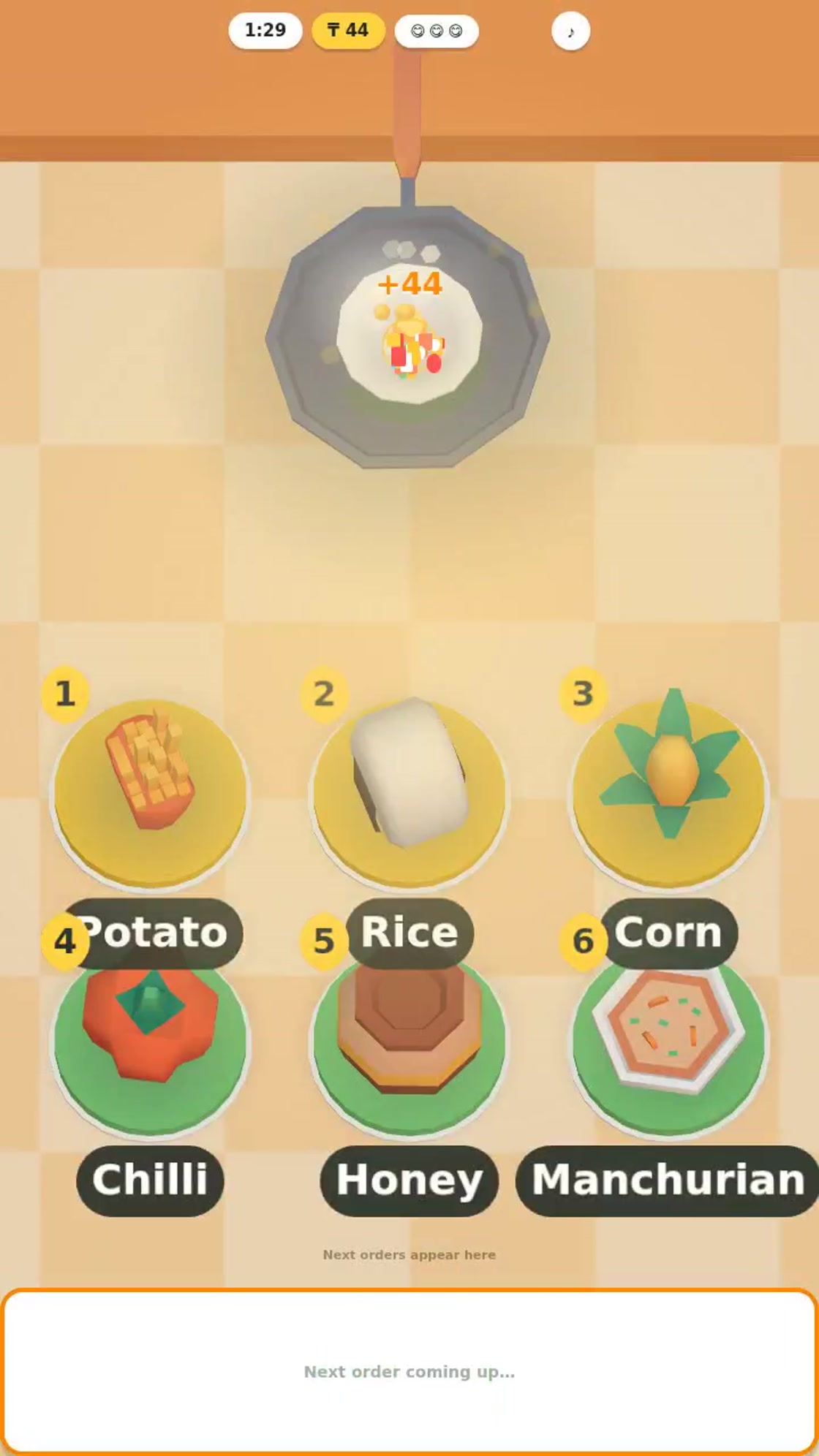
The 3D ingredient models, flying food, sizzling wok, and visible tip bursts make the recipe’s progress easy to follow. The gallery below contains genuine gameplay frames from the official Oppoz preview, showing a completed ingredient sequence and its serving reward. Follow the verified play link to start a shift, then see how long you can keep quick service and careful reading working together.
Inside the game