
Hookfly: knowing when to let go is the whole adventure
One held button creates a swing; releasing it creates the next flight. Hookfly combines momentum, crystal collecting, and permanent upgrades in a neon cavern.
One button, two kinds of movement
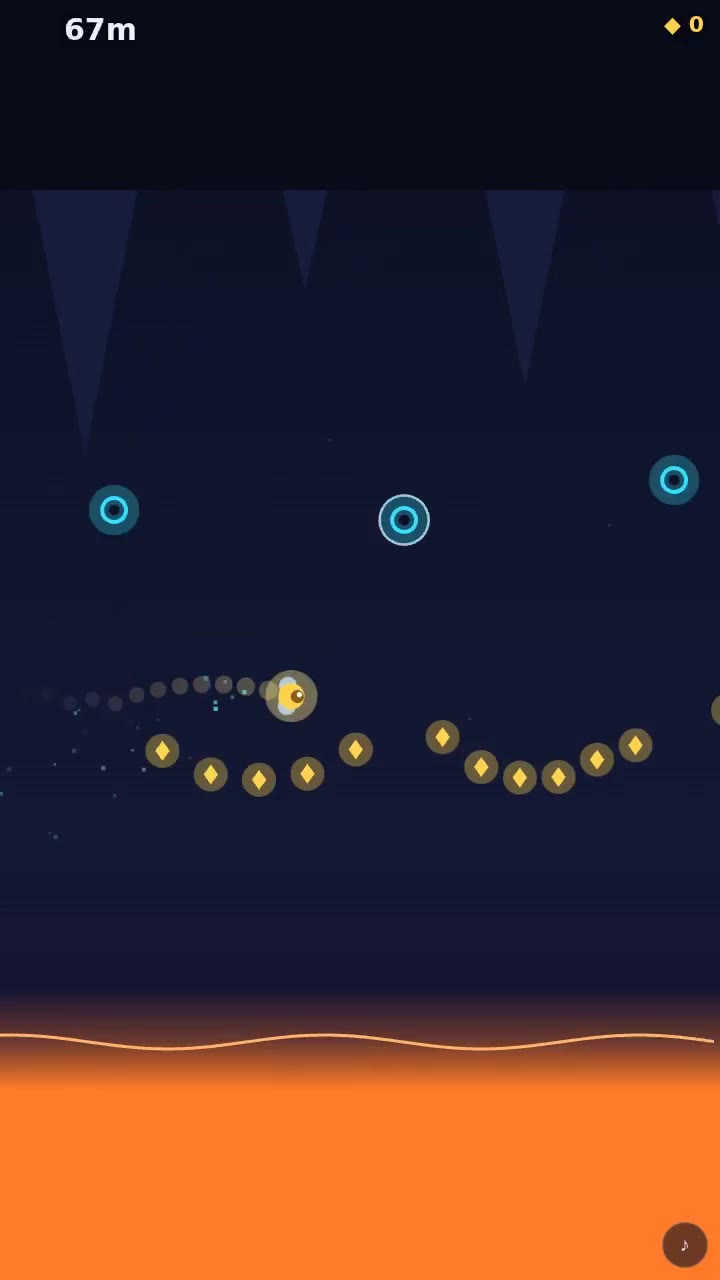
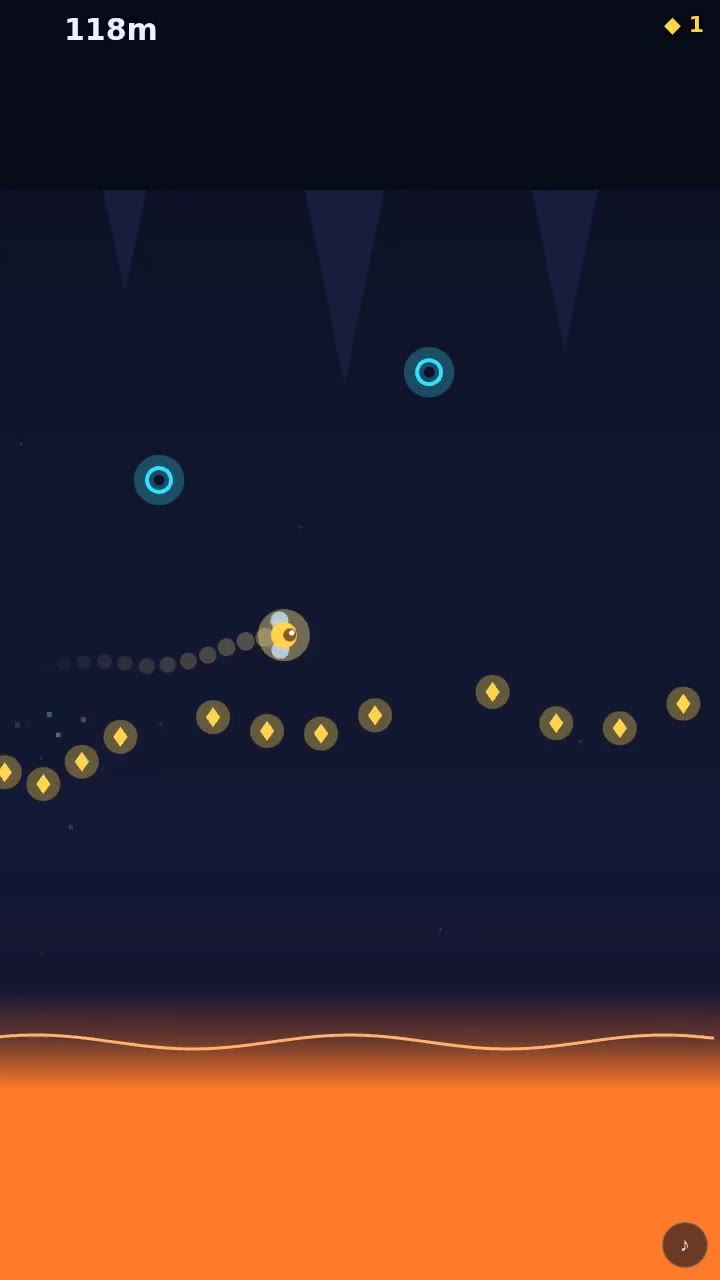
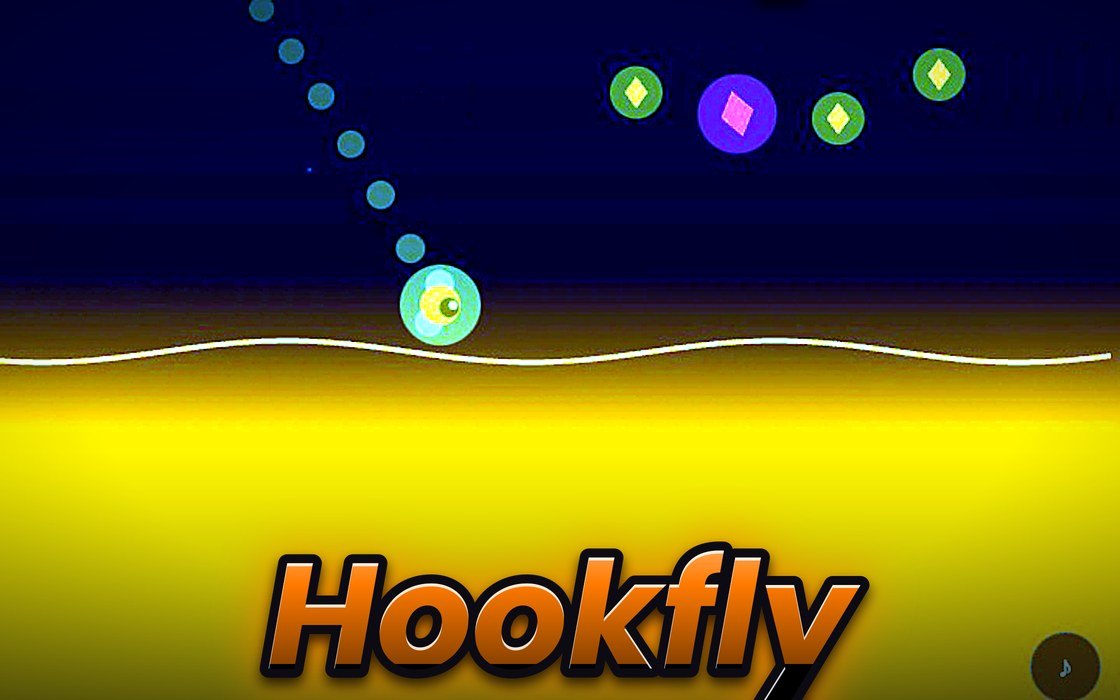
Hookfly sends a small glowing character through a dark cavern above a bright lava floor. Floating anchors offer a way to swing, while open space offers a chance to fly. Hold the hook control to attach when a suitable anchor is in reach, then release to continue through the air. The distance counter keeps the main ambition simple: travel farther than your previous run.
The current Oppoz release uses a single main action rather than separate steering and jumping buttons. That makes the input easy to explain, but the timing remains expressive. Holding and releasing are useful at different moments, and a good flight depends on the motion you already have. The cavern is a place to read ahead, not merely a backdrop to tap against.
How to play: watch the arc
Use Space or the mouse on desktop, or hold on the play area with a finger on touch devices. Holding attempts to hook an eligible anchor. Releasing detaches you. The current source automatically selects a suitable anchor, so you are deciding when to engage rather than dragging a targeting cursor onto each ring. An available anchor still has to fall within your reach.
Once attached, the rope gradually shortens and the swing builds motion. Letting go preserves that motion and adds the release behaviour supplied by your upgrades. Look at the character’s direction before releasing. A high position alone does not guarantee a useful flight; the important question is whether the next part of the arc carries you toward another safe opportunity.
Crystals make the route tempting
Crystal trails give you a second objective besides distance. They invite you to fly through particular parts of the cavern, often lower than the anchors. The bright lava below creates a clear cost for descending too far. Saws supply another hazard, including moving ones in the current game logic. Reaching toward a collectible therefore needs to be balanced against the next attachment you can make.
The upgrade shop turns collected currency into changes for future runs. Silk Reach increases hook range; Release Boost strengthens the upward push when you let go. Crystal Magnet attracts nearby crystals, Guardian Shell supplies shields, and Lucky Gems makes valuable rare gems more likely. These options support different immediate needs instead of only increasing one general score multiplier.
Why a short run can teach something
A run gives you repeated versions of a small physical question: should I stay on this rope or commit to the next flight? Sometimes a safer attachment is more valuable than an attractive crystal trail. Sometimes remaining attached too long leaves you with a poor angle. Because the action set stays compact, changes in timing are easier to notice than they would be among many unrelated controls.
My reading of the design is that upgrades and physical practice provide two forms of progress. A longer reach changes which anchors are available, while a better-timed release changes how you use them. Both can make a familiar-looking situation feel different. This is an analysis of the current systems, not an invented account of the developer’s intentions or a promise that every purchase produces a record.
Choose a goal for the next attempt
For your first few runs, focus on making a clean transfer between anchors. Watch the trail behind the character and the shape of the swing. Once that feels understandable, choose whether the next attempt is about distance or collecting enough crystals for a particular upgrade. A narrow goal makes a failed run easier to interpret: you can identify what you were trying to improve.
The game saves its currency, best distance, and upgrade levels through browser storage. Keeping those records makes returning to the shop part of the next attempt rather than starting every session from nothing. The images below are genuine gameplay frames from Hookfly’s official Oppoz preview. Use the verified play link to try the cavern, then see whether your next release creates a better route.
Inside the game