
Hoop Rush: finding your rhythm in sixty seconds
Four returning balls, a ticking clock, and a hoop that rewards a clean shot. Discover the timing and touch behind Oppoz's arcade basketball challenge.
An arcade cabinet in your browser
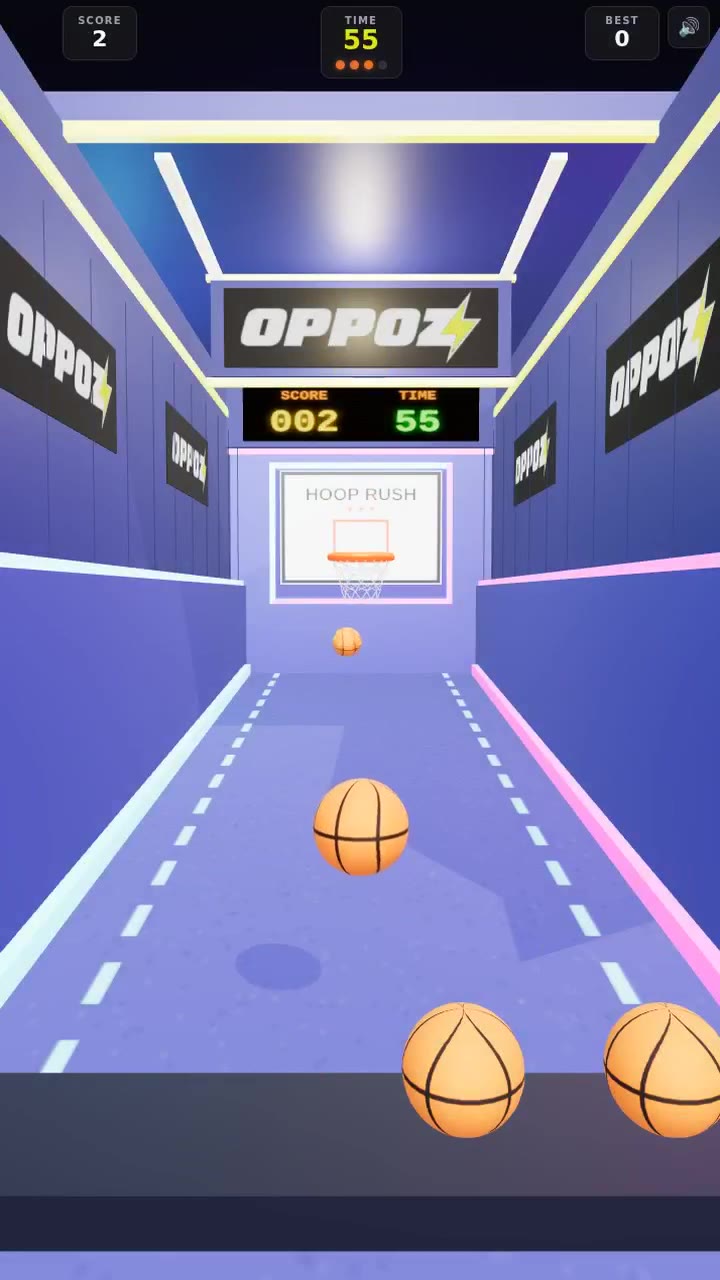
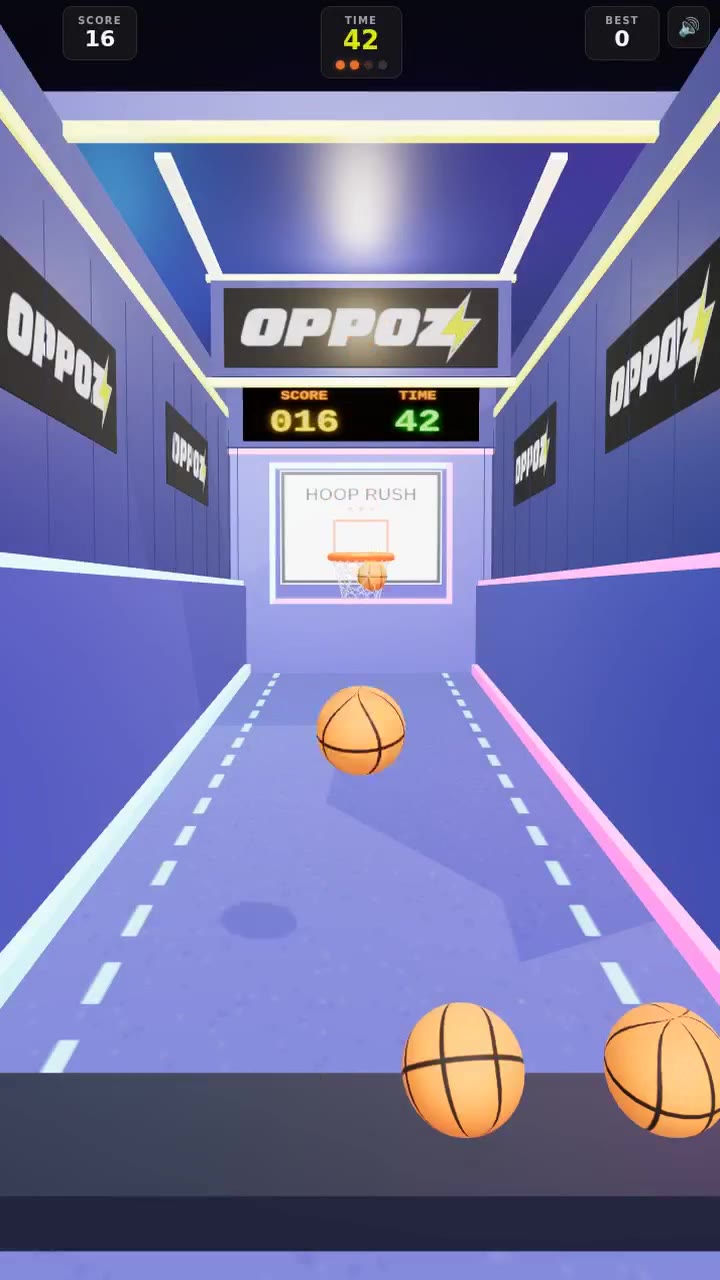
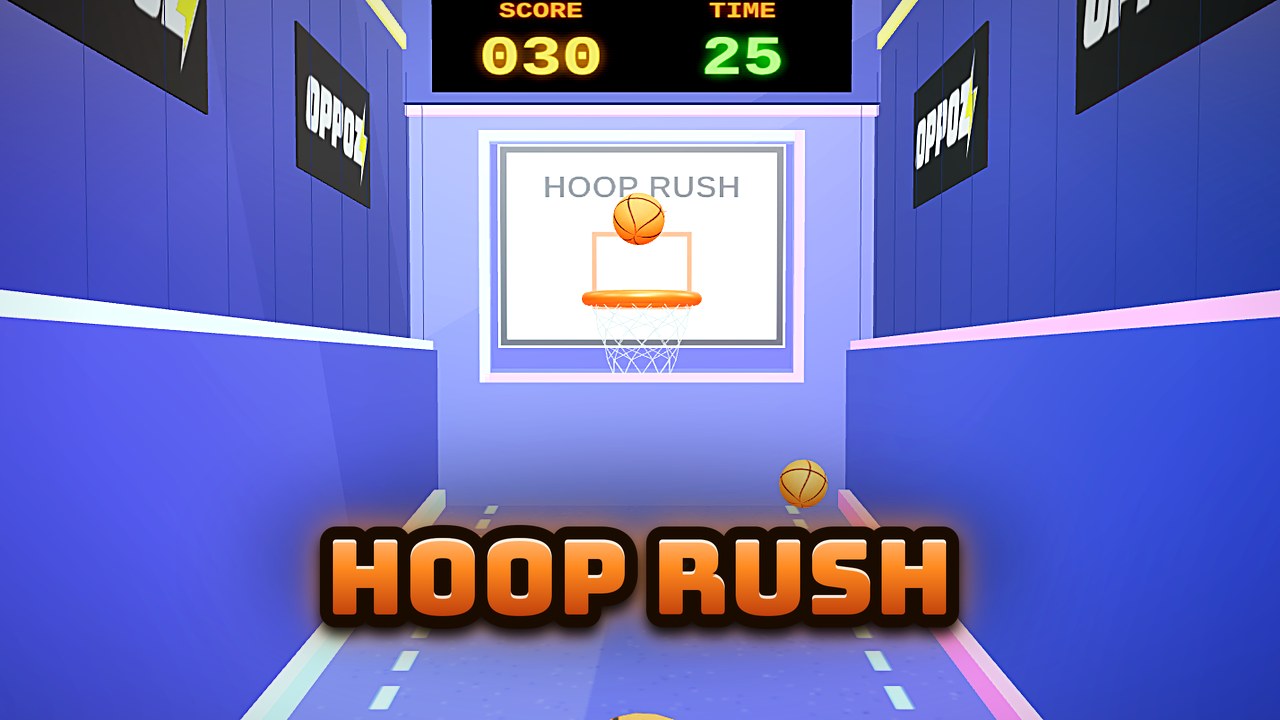
Hoop Rush takes the familiar basketball shooting cabinet and builds a short browser challenge around it. You face a three-dimensional lane, a basket, four balls, and a sixty-second clock. There is no team to manage and no opponent to chase around a court. The contest is between the shot you intend to make, the movement of your hand, and the amount of time you have left.
That compact setup gives every attempt an immediate purpose. You can see the hoop, the score, and the timer together. Balls return down the lane, keeping the cabinet feeling active rather than turning each shot into a separate menu interaction. The current game is verified live on Oppoz, where you can open it in the browser and work on your next personal best.
How to play: swipe with intention
Swipe upwards to throw a ball. On a desktop, the same action is a pointer drag followed by release. A harder, faster upward swipe produces more power, while the sideways angle changes your aim. You are shaping a physical gesture rather than pressing a button that always launches the same shot. Start with a controlled, fairly straight motion and use the resulting flight to judge your next adjustment.
The four balls are a circulating supply, not four lives. Balls roll back so you can keep shooting during the round. That makes timing part of the challenge: the best pace is one at which you can still make deliberate throws. A swipe that is quick but poorly aimed spends precious seconds without helping your score. Watch the available balls and resist treating the final stretch as a reason to abandon your technique.
What makes a good shot more rewarding
An ordinary basket is worth two points in the current rules. A swish adds a bonus, and three consecutive makes activate the on-fire scoring bonus. Those layers give you more than one way to improve. Making more shots matters, but the quality and consistency of those shots matter too. A steadier run can become more valuable than a frantic sequence with occasional lucky baskets.
The three-dimensional cabinet also gives each attempt a visible journey. A ball leaves the foreground, travels towards the hoop, and joins the returning supply. That makes your mistakes easier to interpret than a simple success-or-failure flash would. You can compare the direction and strength of your gesture with where the ball actually went, then decide whether to change the angle, the power, or both.
The design psychology: repetition with feedback
Our interpretation of Hoop Rush's appeal is that it makes repetition informative. The basic task stays stable, so each throw becomes a small experiment. If a slightly gentler swipe gives a better result, you have something concrete to repeat. That feeling of learning a motion can make a short score challenge satisfying even before you beat a record. This is editorial analysis of the rules and controls, not a claim about private developer intentions.
The fixed clock gives that learning a clear boundary. You know when the attempt will finish and can compare one complete round with another. Meanwhile, the swish and streak bonuses encourage a balance between speed and accuracy. The game does not require a complicated explanation to create that tension: the basket rewards precision while the countdown asks you to keep moving.
Why it is fun — and a useful first-round approach
The pleasure comes from finding a repeatable rhythm. One good shot feels promising; several in succession make the lane feel like something you understand. A returning ball offers another chance to reproduce that motion, and the clock keeps the sequence lively. Hoop Rush is especially suited to players who enjoy improving a simple skill through short attempts rather than learning a large set of commands.
For your first round, aim for consistency before maximum shooting speed. Notice where misses travel and change only one part of your swipe at a time. Once you have a reliable motion, look for a pace that preserves it while using the returning balls efficiently. The play link below opens the verified Oppoz version. This article is a spotlight on that live game, not an announcement of an unverified launch on another store.
Inside the game