
Lightning Edge: every jump needs a landing plan
Steer a spacecraft across suspended roads, manage fuel, and learn the difference between speed and control. Explore Lightning Edge’s verified browser release on Oppoz.
A road suspended in space
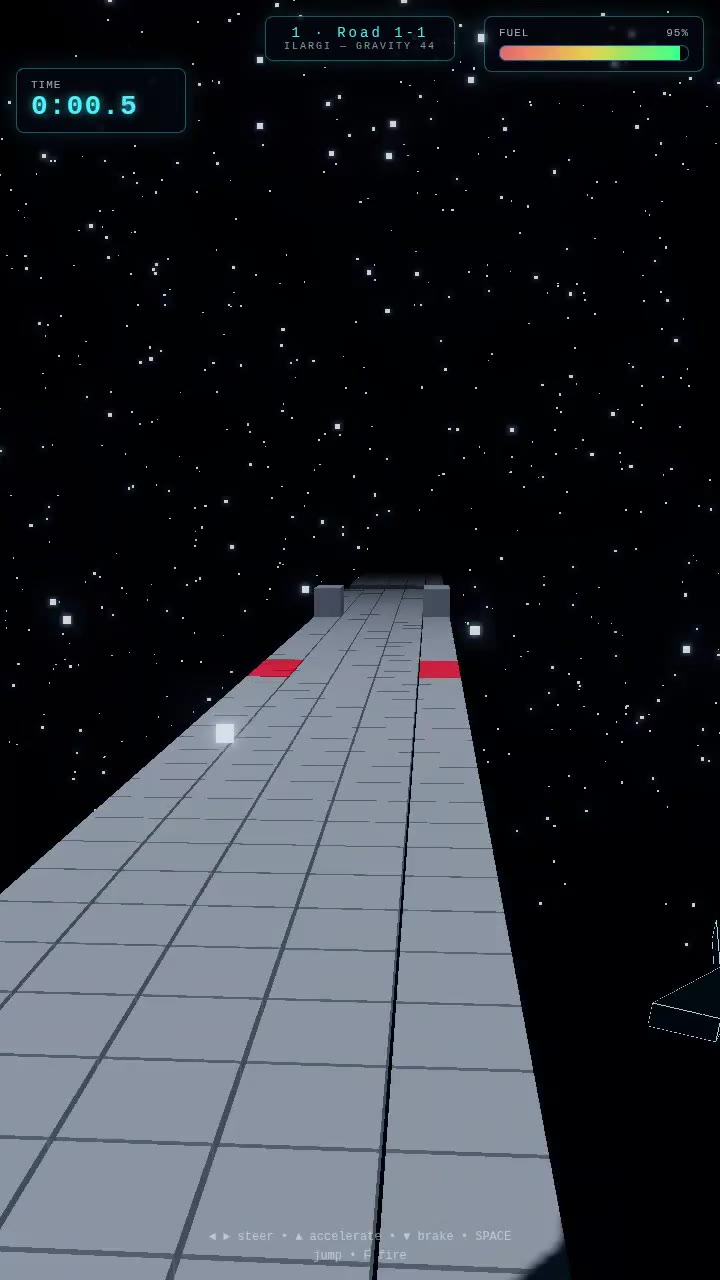
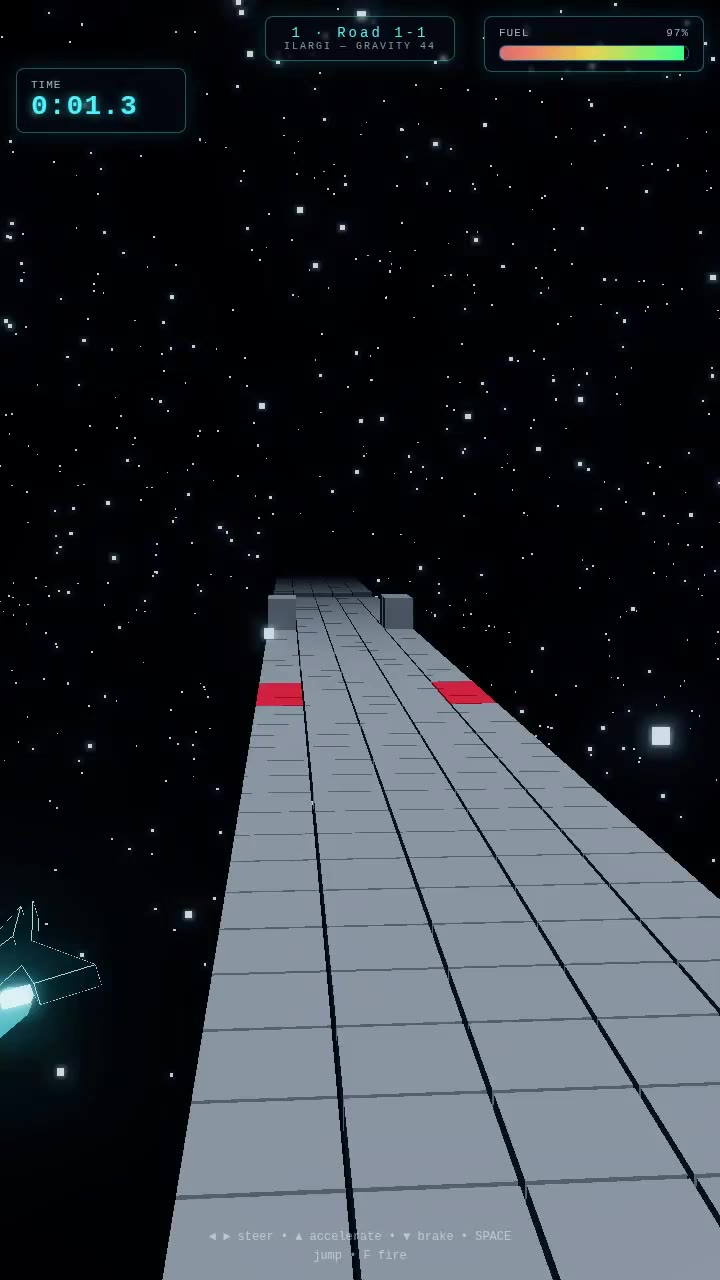
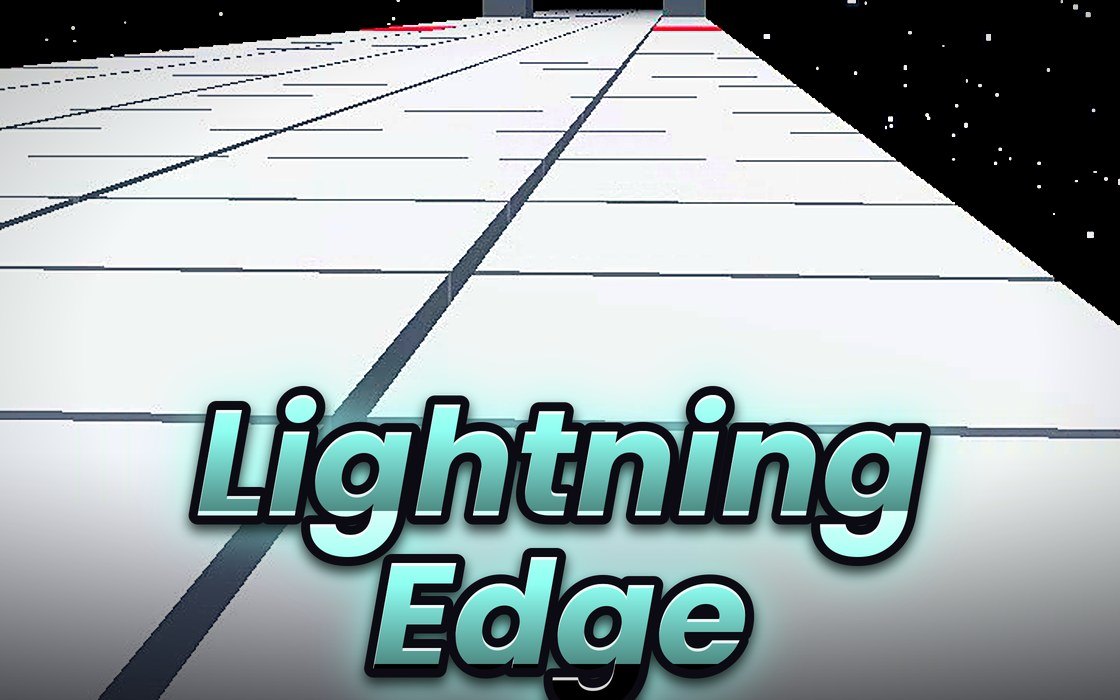
Lightning Edge puts a spacecraft above a tiled road with open space on either side. The route ahead is visible, but staying on it requires more than pointing forward. You steer, accelerate, brake, and jump while watching a fuel gauge. A gap is a question about your approach, your speed, and where the ship will touch down. A successful run links those decisions together.
The current Oppoz build identifies the game as a neon grid racer and credits Faizal Khan and Nikhil Malankar under OneTwistArcade. Its level selection, replay controls, and recorded completion times make it a course-based challenge. This spotlight describes that verified browser version, using its current controls and game logic rather than assuming that historical Android builds match it.
How to play: steer before you leap
On desktop, use the left and right arrow keys to steer, Up to accelerate, Down to brake, Space to jump, and F to fire. The portrait touch interface supplies steering, brake, fire, and jump buttons. Begin with small corrections. A ship approaching the edge needs a useful landing position, not simply another hurried jump that carries the same sideways motion into empty space.
The game displays time, the selected road, its world and gravity, and remaining fuel. Notice these before chasing a fast finish. The current source gives each course a gravity value, so a jump belongs to the conditions of that road. Braking can help you organise an approach, but stopping indefinitely is not a solution to a limited fuel supply.
The road changes the decision
Different surfaces make the route more than a plain strip. The live game logic includes danger tiles, speed boosts, refuelling tiles, sticky surfaces, raised sections, and tunnels. A boost changes your speed; a refuelling tile changes what remains possible later. A tunnel asks you to think about clearance as well as direction. Reading the track becomes as important as reacting to it.
Enemy ships add another layer where they appear. The player can fire, while hostile ships can activate and shoot when the approach brings them into range. A collision or a hit can end an attempt. The practical lesson is to keep the next piece of road in view while dealing with an immediate threat: winning an encounter does not create a landing surface underneath you.
Why replaying a course can feel rewarding
The first successful attempt and the fastest successful attempt are different goals. At first, finishing means learning which corrections keep the craft safe. Later, the same stretch can become a chance to brake less, jump from a better position, or approach a useful tile more deliberately. The game records a best completion time and unlocks further courses, so both kinds of progress have a visible place.
My analysis of the design is that the narrow road makes cause and consequence legible. You can often connect a mistake with an earlier steering or timing decision. Fuel adds a reason to commit, while replay makes the commitment repeatable. This is an interpretation of the mechanics, not a claim about documented developer intent or measured improvements in player skill.
A useful first-session goal
Choose a road and concentrate on completing one controlled section at a time. Watch where the ship lands after a jump and how much sideways motion remains. When a particular obstacle ends an attempt, change one part of your approach on the replay. That gives you a clearer comparison than accelerating harder and changing direction at every moment.
The screenshot gallery contains genuine frames from the official Oppoz preview, showing the suspended track, spacecraft, and fuel display. The verified place to play is linked below. Once you have a safe route, the completion timer offers a different challenge: find a cleaner sequence of actions that reaches the same destination with fewer uncertain corrections.
Inside the game