
Slingshot Infinity: launch hard, spend fuel carefully, coast farther
Charge the launch rail, steer for pickups, and turn stardust into a better rocket. Slingshot Infinity mixes timing, limited thrust, and a growing journey through space.
A launch is only the beginning
Slingshot Infinity asks how far you can send a rocket with a charged launch and a limited supply of fuel. You begin at the launch pad, release the slingshot, and manage the flight as speed falls away. The distance grows from familiar atmospheric heights toward increasingly extravagant space zones. Each completed attempt earns stardust that can improve the next machine.
The verified Oppoz browser release makes the cycle clear: launch, burn, coast, collect the result, and upgrade. It is an arcade progression game rather than a realistic spaceflight simulation. Its expanding distance scale and destinations are part of the fantasy of going farther, giving a short flight an ambition that stretches well beyond the first patch of sky.
How to play: separate power from direction
During launch preparation, hold the action control to charge and release it to launch. The power indicator rises and falls, so holding forever does not guarantee a stronger release. On desktop, Space is the main action and the mouse or left and right controls steer. In flight, holding the action burns fuel; releasing it lets the rocket coast.
The touch interface separates these jobs. Drag in the flight area to steer, and hold either lower-corner burn pad to use thrust. This lets one thumb guide the rocket while the other controls its engine. The current build includes an interactive tutorial for steering, burning, and combining both. During those teaching steps the flight is frozen, so learning the gesture does not spend the first launch’s fuel.
A pickup is a reason to change course
The rocket encounters fuel pickups, stardust, rings, and hazards during flight. Steering gives you a way to pursue the useful objects instead of watching the altitude counter passively. The engine increases speed while fuel lasts, but gravity and drag reduce it. When the rocket slows sufficiently, the run ends and shows distance, reached zone, pickups, and the stardust earned.
That creates a practical distinction between a strong launch and a strong flight. Releasing the power meter well gives you a useful start; decisions afterward determine how you use it. A tempting pickup still needs a sensible approach. Watch your fuel display and the nearby objects together, rather than treating the burn button as something that must remain held for the entire journey.
Build for the limit you keep reaching
The hangar offers several different upgrades. Launch Rail raises launch speed, Engine Thrust strengthens the burn, and Fuel Cell extends burn time. Nose Cone reduces atmospheric drag, while Ion Drive supports coasting through space. Tractor Beam widens pickup range, and Warp Core increases the distance scale. These are distinct adjustments to the flight rather than differently named copies of one improvement.
My reading of the design is that the result screen and separate upgrade roles help turn a disappointing flight into a next experiment. A rocket that starts weakly presents a different question from one that loses speed after its fuel ends. Choosing an upgrade gives a way to act on that observation. This is an interpretation of the mechanics, not a documented developer claim or a guaranteed optimal purchase strategy.
Why one more launch can be appealing
A flight has an immediate outcome, but it also contributes to a longer record of best distance, deepest zone, and upgraded equipment. That gives a modest attempt a purpose even when it does not set a record. The changing scenery marks progress in a way a number alone cannot: a new region gives the journey a fresh visual context.
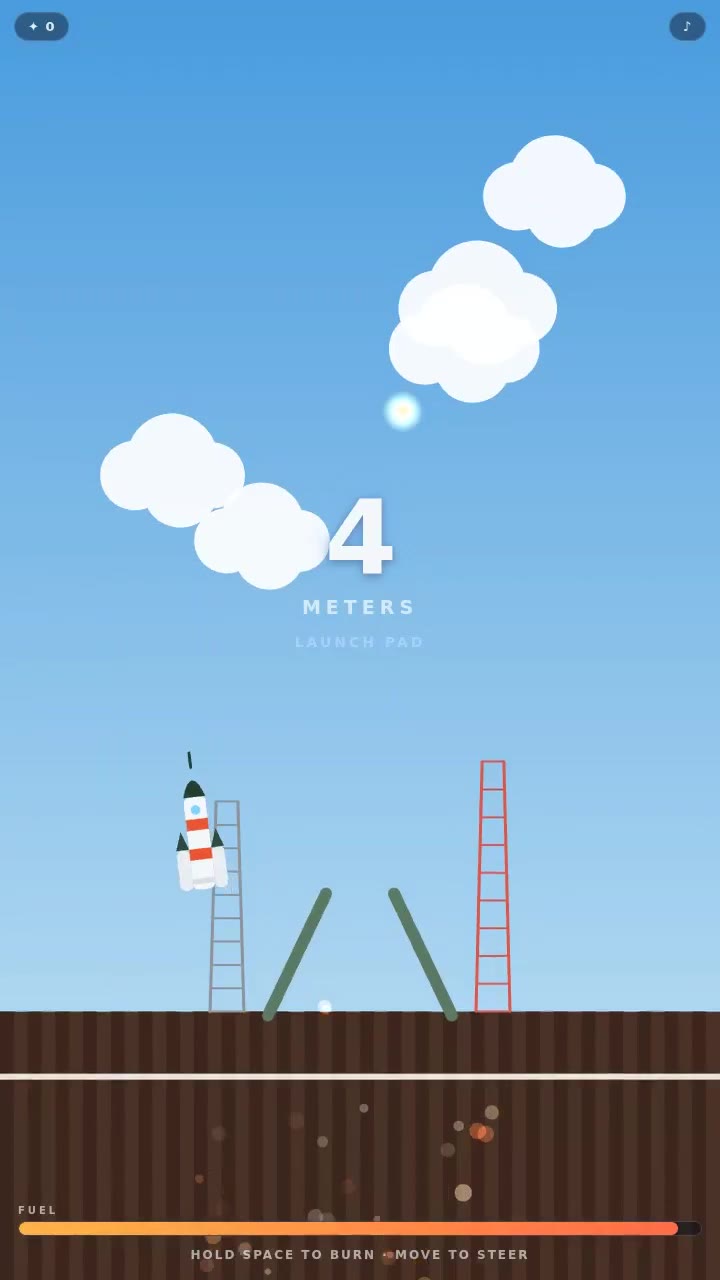
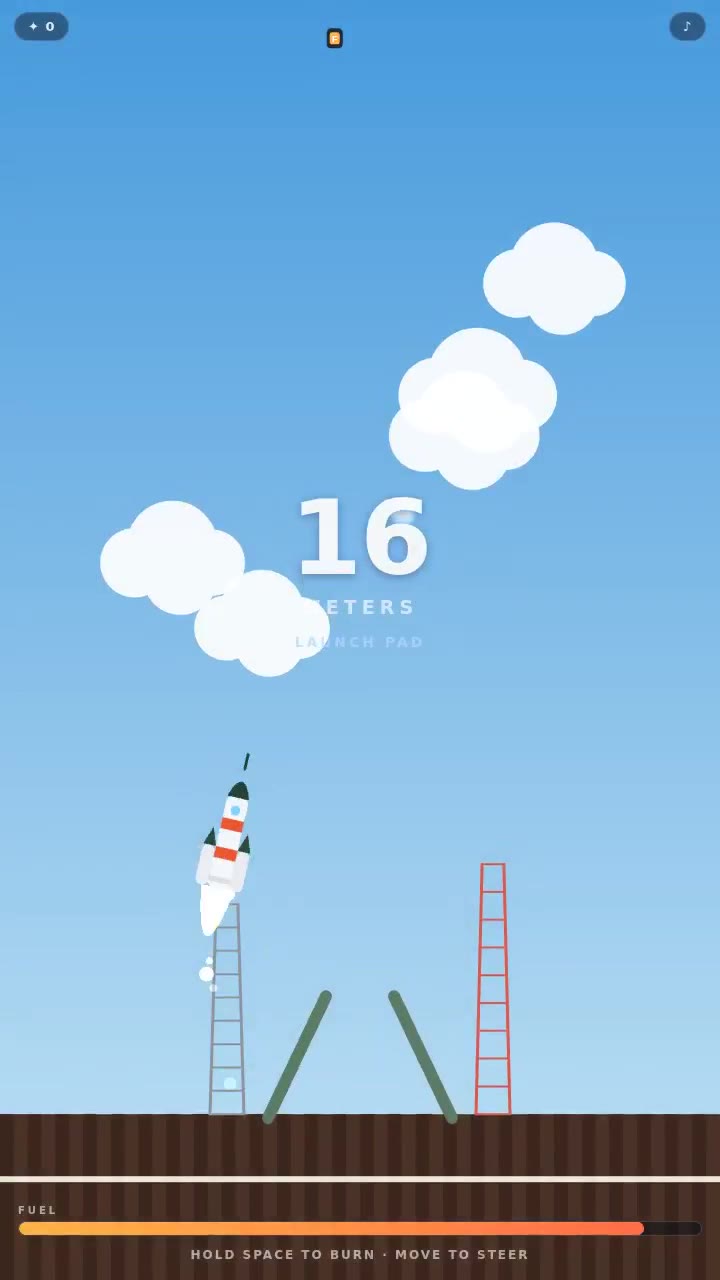
Begin by learning the charge meter, then practise steering without burning by accident. After a run, choose one limitation to investigate on the next launch rather than buying upgrades without looking at the result. The gallery contains genuine active-flight frames from the official Oppoz preview. Follow the verified play link below, launch, and find out how much farther a more deliberate burn and a better-equipped rocket can travel.
Inside the game