
Voxel Key: Build One Connected Shape from Three Views
Use front, top and side block counts to construct a three-layer key, with slice inspection and overfill warnings helping you reason through the lock.
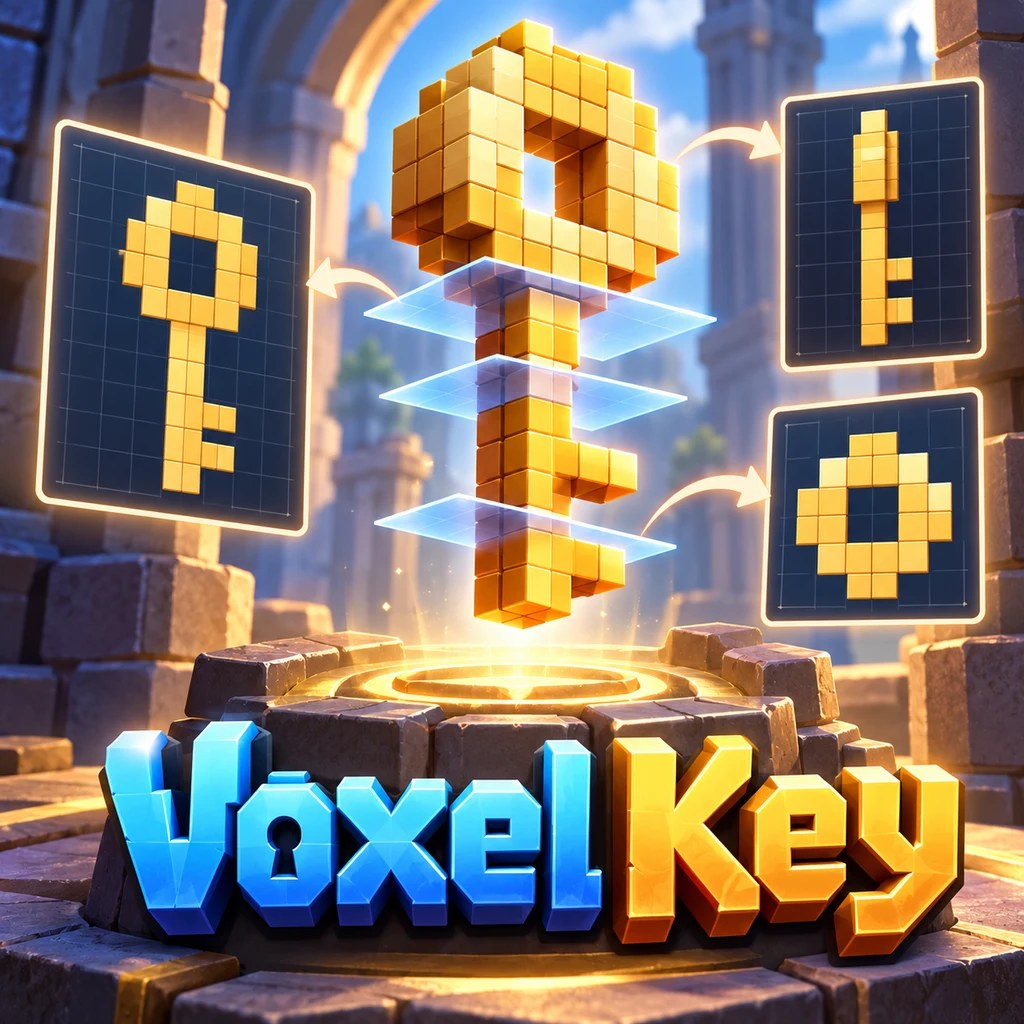
A key described by measurements
Voxel Key is a construction puzzle in which a lock describes the shape it needs through block counts. You build inside a three-by-three-by-three space, editing one height layer at a time. Front, top and side gauges measure the occupied cells along different sight lines. To open the lock, every one of the 27 measurements must match and all placed blocks must form one connected key.
The current game contains 24 locks. A convincing silhouette from one direction is not sufficient: several different arrangements can share an individual line count. You have to combine the evidence from the three views. That makes each placement a small deduction about a solid object rather than an exercise in copying a single visible outline.
Edit a layer and keep its orientation clear
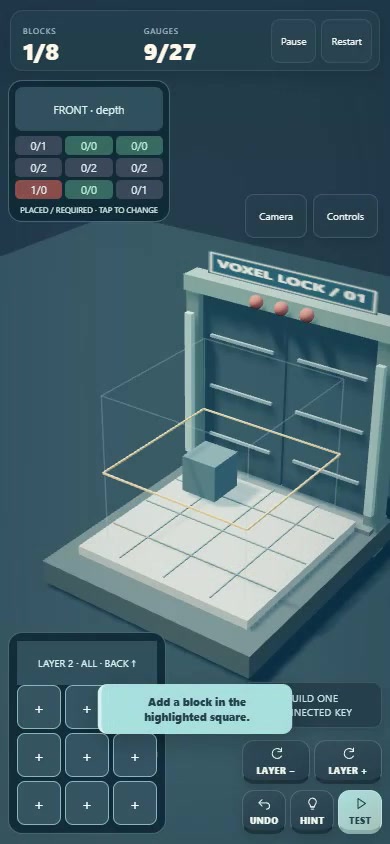
The three-by-three editor represents the selected height layer. Its top row is the back of the build area, with columns running from left to right. Tap a square to add or remove a block. LAYER minus and plus, or Q and E, change height; number keys 1 through 9 toggle cells in the selected layer.
Tap the LAYER heading or press I to isolate the current slice in the three-dimensional view. This hides the other layers for inspection without deleting their blocks. V rotates the camera. Those tools help when a cell is obscured or when the depth of a placement is difficult to read. Check the layer indicator before adding a block that appears to be missing from the view.
Combine all three sets of gauges
Each gauge shows placed blocks against required blocks along a sight line. FRONT counts depth, TOP counts height and SIDE counts width. Tap the gauge heading to cycle between views. Front and side rows run from top to bottom, while top-view rows run from back to front. Keeping that orientation consistent prevents a correct deduction from being applied to the wrong cell.
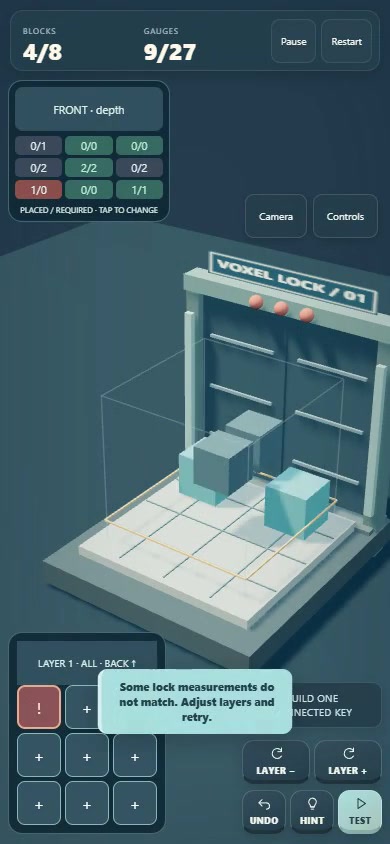
One block contributes to a measurement in each of the three views. When a line is overfilled, its gauge warns you, and relevant occupied editor cells show a red exclamation mark. Treat the warning as a contradiction to resolve, not merely a suggestion to remove the most recently placed block. Another cell on the same line may be responsible for an otherwise incompatible arrangement.
A matching key must also stay connected
The displayed block budget limits how many cells you can fill. Once all available blocks are used, remove a block before adding another elsewhere. TEST or R checks the construction and moves the key toward the lock. Matching all measurements is necessary, but disconnected pieces still fail. Blocks must join through shared faces; touching only at a corner is not enough to connect the key.
A failed test returns you to editing with the layout preserved. UNDO or Z repairs an edit. HINT or H selects a reference cell to add or remove and changes to the appropriate layer, but caps the star award at two. These aids let you investigate a mistaken arrangement instead of needing to discard the entire construction immediately.
The extra goal behind Locksmith
The Locksmith seal requires no hints, a successful first test and an edit count equal to the required block budget. The same efficient first-test condition earns three stars when unassisted. Since the finished key needs the full set of required blocks, extra add-and-remove experimentation can move you away from that target. Build understanding first, then attempt a cleaner construction when the measurements make sense.
My design analysis is that Voxel Key makes players translate between a solid object and several partial descriptions of it. Each gauge is simple on its own, but their intersection supplies the challenge. Slice isolation and overfill warnings make those relationships easier to inspect. The pleasure can come from resolving an uncertain cell using evidence elsewhere, then watching several readings agree at once. This is an interpretation of the mechanics, not a documented statement of developer intent.
Where to play
Play Voxel Key on Oppoz using the verified link below. The linked current game and official preview provide the primary references. Gallery images are genuine gameplay frames from that preview, while the cover is promotional artwork. Matching releases on CrazyGames, Playgama and Google Play remain unverified, so this spotlight includes only the confirmed Oppoz destination rather than guessing external store links.
Inside the game